The alarm goes off at 4:45 AM. Not a phone alarm — most teahouses above 3,000 meters have patchy reception at best. It is a mental alarm, calibrated by years of early starts, mountain rhythms, and the quiet discipline that comes from leading people through some of the most demanding terrain on earth. By 5:00 AM, our SASANE guide is dressed, checking the weather from the teahouse doorway, and mentally reviewing the day's route against yesterday's conditions.
This is what a day looks like for one of 200+ women SASANE has brought into the profession, certified by Nepal's Department of Tourism as professional trekking guides. Not a charity project. Not a feel-good side story. A professional workday in one of the world's most physically demanding professions — performed by women who rebuilt their lives from the ground up.
5:00 AM — Weather and Route Assessment
Before any trekker stirs, the guide is already working. She steps outside and reads the sky — not with an app, but with the knowledge developed during 6 months of intensive training and years of subsequent field experience.
Cloud formations over the ridgeline indicate whether afternoon rain will arrive early. Wind direction tells her whether the high pass will be sheltered or exposed. Temperature at dawn predicts snow conditions higher up. These readings are not instinct — they are skills taught in SASANE's Phase 2 technical training and refined through thousands of hours on the trail.
If conditions require route changes, she makes the call now — before the group wakes, before expectations form around the original plan. A detour through the lower valley instead of the exposed ridge. An earlier start to clear a pass before weather rolls in. A rest day if altitude signs warrant it.
This decision-making authority is significant. The Sustainable Hospitality Alliance specifically noted that SASANE "places women at the forefront of its operations and decision-making." At 5:00 AM, alone on a teahouse porch at 3,500 meters, that is not a slogan. It is the job.
5:30 AM — Kitchen Coordination and Dietary Management
By 5:30, she is in the teahouse kitchen — not because it is her job to cook, but because she is the one who knows that the Australian in Room 3 has a nut allergy, the German couple are vegetarian, and the solo traveler from Japan requested extra rice at dinner last night and might need altitude-appropriate carbohydrate loading today.
She confirms breakfast preparation meets all dietary requirements. She checks that water bottles are filled and purification tabs are available. She briefs the kitchen on lunch timing and location — a teahouse she selected days ago for its food quality, clean kitchen, and position on the route.
SASANE guides are trained in nutrition for altitude performance — not as dietitians, but as professionals who understand that what a trekker eats at 3,800 meters directly affects their energy, mood, and altitude tolerance three hours later. This knowledge comes from SASANE's first-aid and emergency response modules, which cover altitude physiology in detail.
6:30 AM — Group Briefing and Safety Check
The group assembles for breakfast. Our guide runs through the day's plan: distance, elevation gain, expected weather, terrain type, and points of interest. She communicates in clear, calm English — a language she learned from near-zero during her training, now spoken with professional fluency after guiding 4,900+ international travelers.
Then comes the gear check. She moves through the group with practiced attention:
- Laces tied correctly for descent? Loose laces cause blisters within an hour.
- Sunscreen applied? At altitude, UV intensity increases 10-12% per 1,000 meters.
- Water accessible without removing the pack? Dehydration at altitude accelerates altitude sickness.
- Trekking poles adjusted to the correct height for today's gradient?
She notices a trekker with a slight limp — barely perceptible, but she caught it during yesterday's final descent. She quietly adjusts the pace plan and identifies a longer rest point where she can assess the situation without drawing group attention.
This observational skill — the ability to read body language, gait, breathing patterns, and mood shifts across a group of strangers from different cultures — is among the hardest things SASANE's training develops. It cannot be taught from a textbook. It comes from supervised field experience under senior guides, thousands of client interactions, and the particular attentiveness that women who have survived exploitation often develop: the ability to read rooms, read people, read danger before it announces itself.
7:00 AM — The Morning Walk
The trail begins. This is the work that ITB Berlin described when they wrote that SASANE "trains local women to become tour guides for the rural mountain villages of Nepal." But the description does not capture the reality of doing it.
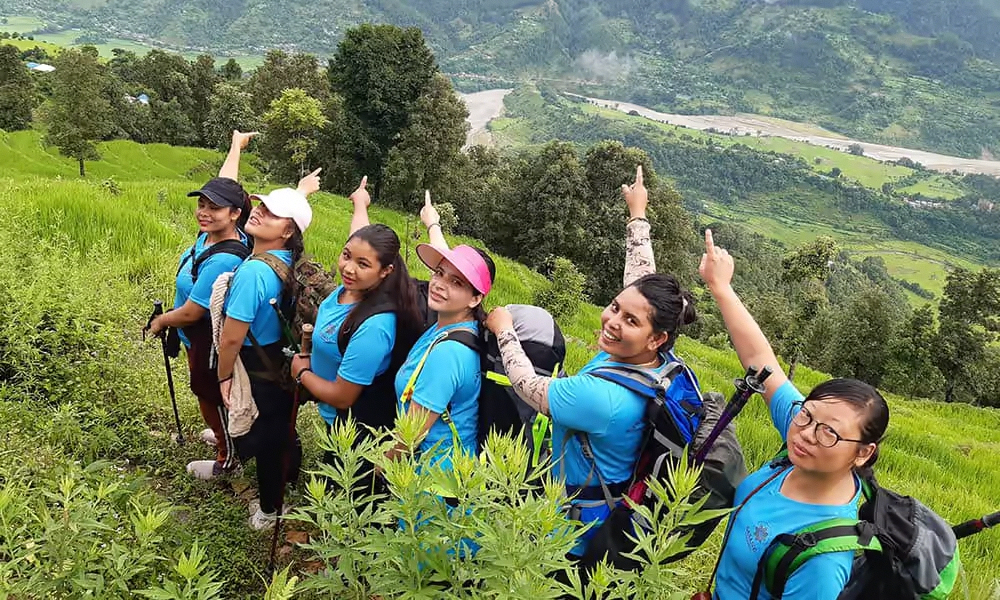
The morning air is cool. Light hits the snow peaks first — golden, then white, then blinding. Mist burns away from the valley floor in slow vertical columns. The guide sets a pace calibrated to the weakest member of the group without making anyone feel they are the reason for slowness. This is art, not science.
She stops to point out a Danphe pheasant (Nepal's national bird, rarely seen below 3,000 meters). She explains the geology of the river valley they are crossing — how the Annapurna massif was once a seabed, how fossils of ancient marine creatures appear in rocks at 5,000 meters. She shares the story of the village they are passing through: which ethnic group lives here, what festivals they celebrate, why the prayer flags are arranged in that specific pattern.
This cultural interpretation — the ability to transform a walk through mountains into an education in Nepali history, ecology, spirituality, and daily life — is what elevates a SASANE guide from porter-with-a-license to genuine professional. It is why travelers return specifically requesting the same guide. It is why Equality in Tourism called the model "a model of gender equity in action."
11:00 AM — Lunch Stop: The Invisible Logistics
The group arrives at a selected teahouse and sees: food, rest, a sunny terrace with mountain views.
What they do not see: the guide coordinating tonight's accommodation by radio. Confirming room availability for seven people. Checking whether the trail ahead has recent rockfall reports. Updating the itinerary mentally based on the group's morning performance — they covered ground faster than expected, so she has flexibility to add a detour to a viewpoint tomorrow.
She reviews her first-aid kit during lunch. Checks the pulse oximeter battery. Counts remaining altitude sickness medication. Confirms the satellite phone has charge. At these altitudes, she is the group's medical first responder, logistics coordinator, cultural interpreter, weather forecaster, and emotional support system — simultaneously.
The group sees her sitting calmly with a cup of tea. They do not see the mental load she is carrying. This is the professionalism that SASANE's 90%+ certification exam pass rate represents — not just knowledge, but the composure to manage complexity without projecting stress onto clients.
1:00 PM — Afternoon Push: Altitude Monitoring
The afternoon section is usually shorter but steeper. This is where altitude effects manifest — not during the morning's gentle ascent, but during the post-lunch climb when blood oxygen drops, energy flags, and the body protests the thin air.
The guide monitors the group constantly:
- Breathing patterns — is anyone stopping more frequently than their fitness level warrants?
- Conversation — has anyone gone unusually quiet? Withdrawal is an early sign of Acute Mountain Sickness.
- Appetite — did everyone eat a full lunch? Loss of appetite above 3,500 meters requires attention.
- Gait — is anyone stumbling, weaving, or placing feet with unusual deliberation?
- Skin color — pale lips or fingertips at altitude indicate poor oxygenation.
She carries a pulse oximeter and uses it discreetly — checking oxygen saturation levels without alarming the group. If readings drop below 85%, she has protocols: rest, hydration, controlled breathing exercises, and if necessary, descent.
These are life-or-death skills. High Altitude Cerebral Edema (HACE) and High Altitude Pulmonary Edema (HAPE) can become fatal within hours if mismanaged. SASANE's training covers both conditions in exhaustive detail because the women leading these treks are responsible for the lives of the people following them.
4:00 PM — Evening: Rest and Connection
By 4:00 PM, the group reaches the evening teahouse. The guide ensures room assignments, orders dinner considering individual preferences and altitude-appropriate nutrition, and confirms tomorrow's wake-up time.
Then — finally — she sits down with her own cup of tea.
The firelight conversations that follow are often what travelers remember most about their trek. Not the summit views. Not the Instagram-worthy sunrise. The evening hours when walls dissolve between guide and traveler, when questions emerge that would not be asked in daylight, when the guide's story — if she chooses to share it — reframes everything the traveler thought they knew about Nepal, about tourism, about what "empowerment" actually means when it is not a slogan but a daily professional reality.
Not every guide shares her personal history. Some prefer to be known purely for their expertise — the routes they have mastered, the birds they can identify, the stories they tell about Nepali mythology. Others choose to share, on their own terms, what brought them to this profession. Either way, the connection that forms over firelight at 3,800 meters — between a traveler from one world and a guide from another — is the human infrastructure that makes SASANE's model work.
8:30 PM — Lights Out
By 8:30, the teahouse is quiet. Tomorrow, the mental alarm goes off at 4:45 again.
This cycle — weather assessment, kitchen coordination, group briefing, trail leadership, logistics management, altitude monitoring, cultural interpretation, emotional attunement, evening connection — repeats daily for the duration of the trek. Seven days on Annapurna. Twelve days in Langtang. Fourteen days around Manaslu.
Each day demands the same level of attention, the same professionalism, the same composure. And each day is performed by a woman who, before SASANE, may have had no career prospects at all — let alone a government-certified license to lead international groups through the highest mountains on earth.
The Work Travelers Never See
Beyond the trail days, SASANE guides carry additional professional responsibilities:
Mentoring incoming trainees. Senior guides supervise new graduates on their first independent trips, providing feedback on client management, safety protocols, and professional development.
Ongoing training. Wilderness first responder certifications require renewal. New routes require familiarization treks. Language skills require constant practice. The learning does not stop at certification.
Business management. Guides manage their own bookings, client communications, equipment maintenance, and financial planning. They are not employees of a large corporation — they are professionals operating within a social enterprise that exists because of their expertise.
Community impact. Every trek generates revenue in the 21 communities where SASANE operates. That revenue — spent at teahouses, on porters, on local food — creates the economic alternatives that reduce trafficking vulnerability. The guide's daily work is, structurally, anti-trafficking prevention in action.
Why This Matters
The To Do Award 2023 was not awarded for good intentions. It was awarded because this daily professional routine — replicated across 200+ certified guides serving 4,900+ travelers — produces measurable impact: a 21 communities rebuilt through survivor-led tourism.
That statistic is not abstract. It is the aggregate result of 4:45 AM alarms, weather readings, gear checks, altitude monitoring, and fireside conversations — performed by women who chose this profession and execute it at the highest standard.
When you book a trek with SASANE, you are not purchasing a charity experience. You are hiring a certified professional whose daily routine looks exactly like what you just read — and whose paycheck directly funds the next woman's 6-month journey from training to certification to independence.
Book a trek with our certified guides →
What Our Travelers Say
"SASANE is an incredible organisation doing massively important work against human trafficking in Nepal. We went to the cooking class in Pokhara and had an amazing time — everyone is so friendly, the momos were so tasty! The presentation afterwards really highlighted the essential nature of SASANE's work. Please come and contribute if you can!"
— mayli, TripAdvisor (July 2025)
Frequently Asked Questions
What time does a typical trekking day start and end? Most SASANE treks begin with a 5:30-6:00 AM breakfast and end at the evening teahouse by 4:00-4:30 PM. The guide is working from 4:45 AM (weather assessment and planning) until the group retires around 8:30 PM. Walking hours are typically 5-7 hours with breaks.
How does my guide monitor for altitude sickness? SASANE guides carry pulse oximeters and are trained to recognize early symptoms: unusual fatigue, loss of appetite, headache, disturbed sleep, and changes in gait or conversation patterns. They monitor continuously without alarming the group, and have clear protocols for when to rest, descend, or call for evacuation.
Will my guide share her personal story during the trek? Only if she chooses to. SASANE guides are professionals hired for their expertise in Nepal's trails, culture, and safety management. Some share their personal journey; others prefer to be known purely for their professional skills. Both approaches are respected, and neither affects guide quality.
What qualifications does my SASANE guide hold? Every SASANE guide holds a government-issued trekking license from Nepal's Department of Tourism — the same certification required of all professional guides nationally. They complete an 6-month training program with a 90%+ exam pass rate and accumulate extensive supervised field experience before guiding independently.
How many travelers has SASANE guided in total? Over 4,900 international travelers have been guided by SASANE's team of 200+ certified women since the organization's founding in 2016. The organization has been recognized with 6+ international awards including the To Do Award for Human Rights in Tourism.
Can I request a specific guide for my trek? Yes. Returning travelers frequently request the same guide. If your preferred guide is available for your dates and route, SASANE will accommodate the request. Contact the team when booking to discuss guide preferences.