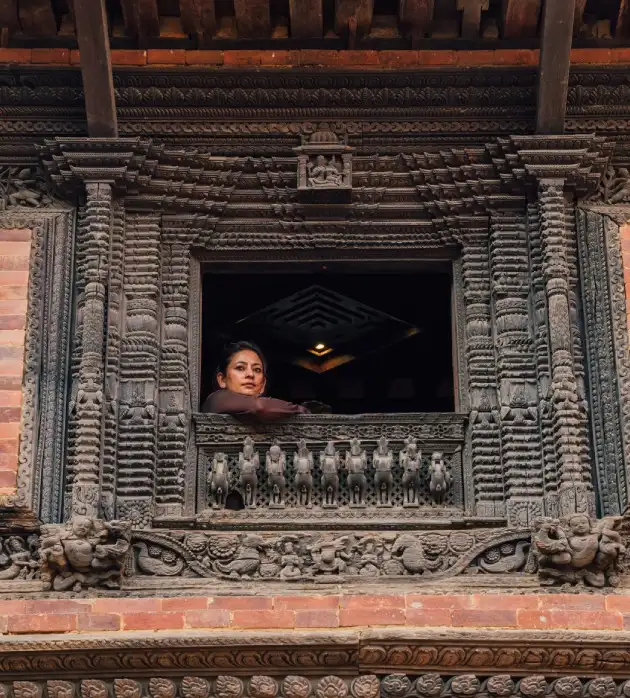
Is Nepal safe for solo women travelers? The short answer: yes. The longer answer requires understanding what makes a destination genuinely safe versus merely marketed as safe — and why traveling with women who have personally navigated danger offers a fundamentally different kind of security than any conventional tour operator can provide.
Nepal has welcomed solo women travelers for decades. The country consistently ranks among the safest in South Asia for independent female travelers, according to both government tourism data and independent traveler surveys. But safety is not a binary state. It exists on a spectrum — and the choices you make about who guides you, where you stay, and how you navigate unfamiliar terrain determine where on that spectrum your experience falls.
SASANE Sisterhood has guided over 4,900 international travelers since 2016 — a significant percentage of them solo women. Not a single safety incident. Not one. This record is not luck. It is the product of a model built by women, for women, with safety woven into every operational decision from route planning to accommodation selection to emergency protocols.
Why Nepal Is Genuinely Safe for Women
Nepal's safety reputation rests on measurable factors, not marketing:
Low violent crime rate. Nepal's homicide is rate lower compared to many European countries like France, and most Southeast Asian destinations. Violent crime against tourists is exceptionally rare and has declined consistently since 2006.
Cultural respect for guests. The Nepali concept of atithi devo bhava — "the guest is god" — is not a tourism slogan. It is a deeply ingrained cultural value. Solo women travelers consistently report feeling welcomed, protected, and looked after by local communities, teahouse owners, and strangers on the trail.
Established tourism infrastructure. Nepal's major trekking routes (Annapurna, Everest, Langtang) have well-developed teahouse networks where solo women are never truly isolated. Other trekkers, teahouse families, and local communities create a continuous safety net along established trails.
Community policing on trails. Tourism is the economic lifeblood of mountain communities. Local people have strong economic incentives to ensure traveler safety — a reputation for danger would devastate livelihoods. Communities self-police aggressively to protect their tourism income.
Government investment in tourism safety. Nepal's Tourism Police unit operates in major tourist areas. The Trekkers' Information Management System (TIMS) tracks all registered trekkers. Rescue helicopter services are available throughout trekking regions.
Geographic advantage. Unlike some destinations where tourism infrastructure is scattered, Nepal's trekking routes funnel travelers along defined paths through communities. You are rarely more than a few hours' walk from help, communication, or other people.
The Difference a Woman Guide Makes
Here is where SASANE's model transforms "safe" from a general statement into a specific, actionable reality.
When your guide is a woman — specifically, a woman who has personally experienced vulnerability, rebuilt her life through professional training, and now navigates the world from a position of hard-won strength — the safety dynamic changes fundamentally:
She reads situations you cannot. A SASANE guide recognizes uncomfortable attention, inappropriate behavior, or unsafe dynamics before they escalate — often before a traveler from a different culture even notices something is off. This is not paranoia. It is pattern recognition developed through lived experience and professional training.
She creates buffer zones. In South Asian cultures, a local woman accompanying a foreign woman changes social dynamics entirely. You are no longer perceived as unaccompanied. You are with someone who speaks the language, understands the social codes, and commands local respect through her professional status.
She knows which spaces are safe — and which are not. Not every teahouse is equal. Not every trail section is equally safe after dark. Not every village has the same attitude toward solo women. Your guide has walked these routes dozens or hundreds of times. She knows which lodges to avoid, which shortcuts are risky at certain hours, and which communities are genuinely welcoming versus performatively so.
She shares your concerns without judgment. Many solo women travelers carry safety anxieties they feel embarrassed to voice — fear of being alone at night, concern about unwanted attention, worry about cultural missteps that might provoke negative reactions. With a SASANE guide, these concerns can be expressed freely because she understands them intimately. There is no minimizing, no "you're overthinking it." There is informed, experienced guidance.
She has emergency skills. Every SASANE guide holds government-issued first aid certification and has completed extensive emergency response training. If something goes wrong — medical emergency, altitude sickness, natural disaster, or security concern — she is trained to respond, communicate with local authorities, and execute evacuation protocols.
The Sustainable Hospitality Alliance recognized this when they named SASANE the "World's Leading Sustainable Female Empowerment Initiative" — noting specifically that the organization promotes travel that "places women at the forefront of its operations and decision-making" in regions where female leadership in tourism remains rare.
Safety by the Numbers
SASANE's safety record is built on data, not promises:
- 4,900+ solo and group travelers guided since 2016 — zero safety incidents
- 200+ certified women guides operating across Nepal's major regions
- 21 communities rebuilt through tourism across 11 partner communities — meaning the areas where SASANE operates are objectively becoming safer for all women, local and visiting
- Government-certified — every guide holds the same national license as any professional guide in Nepal
- To Do Award 2023 — first Nepal enterprise to win this human rights in tourism award, validating the safety and ethics of the model
These numbers matter because safety claims without data are marketing. Safety claims with a decade of operational history, international audit recognition, and government certification are evidence.
Practical Safety for Solo Women in Nepal
Based on guiding 4,900+ travelers — many of them solo women — here is what our guides consistently recommend:
Before You Arrive
Register your trek. Obtain a TIMS card (Trekkers' Information Management System) through your guide or agency. This ensures you are tracked on the route and searchable if communication is lost.
Share your itinerary. Leave a copy of your planned route with someone at home and with your embassy. SASANE provides detailed itineraries to all travelers before departure.
Check insurance coverage. Ensure your travel insurance covers helicopter evacuation above 3,000 meters. Standard policies often exclude high-altitude rescue. SASANE guides carry satellite communication for emergency calls regardless of cellular coverage.
Pack a headlamp. Power outages are common in mountain teahouses. A headlamp ensures you never walk dark corridors or trails without visibility — a simple measure that dramatically improves nighttime safety.
On the Trail
Stay with your guide. The most common safety errors happen when trekkers separate from their group — taking solo side trails, starting before the guide, or lingering behind the group pace. Your SASANE guide plans routes, rest points, and pacing specifically to keep the group together safely.
Trust your guide's accommodation choices. When your guide recommends a specific teahouse over a cheaper or more convenient option, there is usually a safety or comfort reason she may not state explicitly. SASANE guides select accommodations based on years of route experience — they know which lodges have secure rooms, which have reliable locks, and which teahouse owners are genuinely trustworthy.
Communicate concerns immediately. If anything makes you uncomfortable — a fellow traveler's behavior, a teahouse situation, a trail condition — tell your guide immediately. SASANE guides are trained to handle these situations discreetly and effectively. They will never dismiss your instinct.
Altitude over ambition. The most dangerous thing on a Nepal trek is not crime — it is altitude sickness caused by ascending too fast. Your guide controls pace for a reason. Trust her medical judgment over your summit ambition. If she says rest, rest. If she says descend, descend.
In Cities (Kathmandu, Pokhara)
Use recommended transportation. SASANE arranges airport transfers, intercity transport, and city navigation. Random taxis and ride-sharing apps exist but vary in reliability. Your guide or SASANE's operations team can coordinate safe, vetted transportation.
Walk populated streets. Kathmandu's Thamel district and Pokhara's Lakeside are tourist-heavy and well-lit. Avoid shortcuts through unlit residential areas after dark — the same advice that applies in any city worldwide.
Dress contextually. Nepal is not restrictive about women's dress, but covering shoulders and knees in temple areas and rural communities demonstrates cultural awareness and reduces unwanted attention. Your guide can advise on specific contexts.
Evening socializing. Nepal's tourist areas have vibrant café and restaurant scenes that are safe for solo women. Bars exist but can attract more aggressive attention late at night. Your guide or hotel staff can recommend evening spots where solo women feel comfortable.
Common Safety Concerns Addressed
"What about trekking alone if I lose the group?"
On SASANE treks, this does not happen. Guides maintain visual or verbal contact with all group members throughout the trail day. If the group has varying fitness levels, the guide positions herself or arranges assistant guides to ensure no one walks alone. Rest points are pre-selected, and the guide confirms headcount at every stop.
"What about unwanted male attention?"
Nepal is considerably less prone to street harassment than many destinations. However, tourist areas can attract attention-seekers. Having a Nepali woman guide beside you eliminates most of this entirely — you are immediately perceived differently than a solo foreigner. If attention does occur, your guide addresses it in Nepali, firmly and culturally appropriately.
"What about nighttime safety in teahouses?"
SASANE guides select accommodations with secure rooms — functional locks, proximity to other travelers or the teahouse family, and rooms accessible without passing through isolated corridors. Guides sleep in the same teahouse and are available at any hour if concerns arise.
"What about the political situation?"
Nepal has been politically stable since the 2006 peace accord. The country transitioned to a federal democratic republic without armed conflict. Strikes (bandhs) occasionally affect city transportation but do not impact trekking routes. Your guide monitors political developments and adjusts urban logistics if needed.
"What about altitude emergencies?"
Every SASANE guide carries a pulse oximeter, knows HACE/HAPE symptoms, and has satellite communication capability for emergency evacuation calls. Routes are planned with acclimatization days built in. The guide has authority to halt ascent or initiate descent regardless of client preferences. Safety overrides itinerary.
Why SASANE Specifically for Solo Women
Many operators in Nepal offer women-friendly or women-led services. SASANE is different because:
The guides are not just female — they are survivors. Women who have personally navigated exploitation, rebuilt their agency, and chosen a career that places them in positions of authority and trust. Their understanding of safety is not theoretical — it is bone-deep.
The model is award-validated. The To Do Award, UNWTO Award for Excellence and Innovation, Booking Booster top 10, and SHA Female Empowerment Initiative awards were not given for marketing. They were given after rigorous evaluation of operations, safety records, and social impact.
Your booking creates structural change. Every trek booked with SASANE pays the women guides who lead you — and funds the next survivor's path into guiding. Your safety is delivered by a professional whose career exists because a previous traveler made the same choice you are making now.
Community-level prevention. The 21 communities rebuilt through tourism across SASANE's partner communities means the regions you trek through are actively becoming safer — for local women and for visiting travelers. Your presence and your spending contribute to that safety infrastructure.
Equality in Tourism named SASANE "a model of gender equity in action — proving that survivor-led enterprises can reshape an entire industry." For solo women travelers, that reshaping means accessing a level of safety, understanding, and professional care that conventional tourism simply cannot match.
Routes Recommended for Solo Women
Based on our guides' experience, these routes offer the best combination of safety infrastructure, scenic reward, and cultural richness for solo women:
Annapurna Base Camp — Well-established teahouse network, consistent other-trekker presence, moderate altitude (4,130m), stunning glacial scenery. 7-10 days.
Langtang Valley — Quieter than Annapurna with excellent community teahouse infrastructure. Close to Kathmandu (short travel day to trailhead). Authentic village culture. 7-9 days.
Kathmandu Valley Cultural Tour — No altitude concerns, UNESCO heritage sites, daily return to city accommodation. Ideal for first-time Nepal visitors or those preferring cultural immersion over high-altitude trekking. 3-5 days.
Pokhara and surroundings — Lake city base with short day treks to viewpoints. Relaxed pace, excellent café culture, optional meditation and wellness add-ons.
Nagarkot sunrise trek — Two-day gentle trek accessible from Kathmandu. Sunrise views over the Himalayan range. No altitude risk. Perfect confidence-builder for nervous first-time solo trekkers.
Planning Your Solo Trip
Best seasons: April-May & August-November (clear skies, dry trails, comfortable temperatures) and March-April (rhododendron season, warming days). Both offer excellent trekking conditions and maximum other-trekker presence on trails.
Group size: SASANE operates with 2-8 travelers per group. Solo travelers are matched with compatible small groups, or can book private guided treks for those who prefer one-on-one guiding.
What to bring: Ask us for a full packing guide here. Key safety items: headlamp, personal first aid basics, copies of passport and insurance, emergency contact card in Nepali and English.
Budget: Nepal remains one of the most affordable trekking destinations globally. Teahouse accommodation, meals on the trail, guide fees, and permits for a 7-10 day trek cost significantly less than equivalent experiences in Patagonia, the Alps, or New Zealand.
Visa: On-arrival visa available for most nationalities at Kathmandu airport. 30-day tourist visa costs $50 USD. No pre-arrangement needed.
Connectivity: Major cities have reliable WiFi. Trail connectivity varies — expect limited phone signal above 3,000 meters. Your guide carries satellite communication for emergencies. Consider a local SIM card (Ncell or NTC) for city use.
The Safety That Changes Lives — Including Yours
Safety is not just the absence of danger. It is the presence of freedom — the freedom to walk without looking over your shoulder, to trust the person guiding you, to sleep soundly in an unfamiliar place, to focus on the mountains rather than managing anxiety.
SASANE's model delivers this freedom because it was built by women who know what its absence feels like. When international organizations like To Do Awards recognized founder Jeny Pokharel among 100 global leaders creating impact, they noted that SASANE "demonstrates how ethical tourism can be a powerful pathway to reintegration and a sustainable livelihood for female survivors." That reintegration — that daily professional confidence — is what your guide brings to the trail every morning at 4:45 AM.
You bring your curiosity, your courage in choosing solo travel, and your willingness to experience Nepal authentically. She brings a decade of organizational safety systems, government certification, lived understanding of vulnerability, and the professional composure that comes from having rebuilt a life from nothing.
Together, that is not just safe travel. It is transformative travel — for both of you.
Plan your solo Nepal journey →
What Our Travelers Say
"SASANE is an incredible organisation doing massively important work against human trafficking in Nepal. Contributing to their cause, even in some small way, is so so important. We went to the cooking class in Pokhara and had an amazing time — everyone is so friendly. The presentation afterwards really highlighted the essential nature of SASANE's work. This is a wonderful experience for a vital cause."
— mayli, TripAdvisor (July 2025)
Frequently Asked Questions
Is Nepal safe for solo women travelers in 2026? Yes. Nepal consistently ranks among the safest South Asian destinations for solo women. Low violent crime rates, strong cultural respect for guests, well-established trekking infrastructure, and tourism police presence make it accessible for independent female travelers. With a certified SASANE guide, the safety margin increases significantly through professional route management and local knowledge.
Do I need a guide for trekking in Nepal? Legally, guides are required in national park trekking areas (Annapurna, Everest, Langtang) as of 2023 regulations. Beyond legal requirement, a certified guide dramatically improves safety through altitude monitoring, emergency communication, weather assessment, and local knowledge that independent trekkers lack.
What makes SASANE different from other women-led tour companies? SASANE's guides are trafficking survivors who completed an 6-month professional training program and government certification. Their understanding of women's safety is experiential, not theoretical. The model has been validated by 6+ international awards including the To Do Award for Human Rights in Tourism (first Nepal enterprise to win).
Can I join a group or must I book a private trek? Both options are available. Solo travelers are matched with small compatible groups (2-8 people) for scheduled departures, or can book private guided treks for those preferring one-on-one guidance. Private treks can be customized in duration, difficulty, and focus.
What is the minimum fitness level required? It varies by route. Kathmandu Valley cultural tours require only comfortable walking ability. Annapurna and Langtang treks require moderate fitness — the ability to walk 5-7 hours daily with elevation gain. Your guide adjusts pace to your ability. No extreme fitness is needed for standard routes.
How far in advance should I book? Peak season (October-November) fills quickly — book 2-3 months ahead. Shoulder seasons (September, December, March) offer more flexibility with 3-4 weeks notice. Private treks can sometimes be arranged within 1-2 weeks depending on guide availability.
What happens if I get altitude sickness? Your SASANE guide monitors for altitude sickness symptoms continuously using pulse oximetry and behavioral observation. If symptoms appear, she implements a rest-and-assess protocol. If symptoms worsen, she initiates controlled descent. Satellite communication is available for helicopter evacuation in serious cases. Routes include built-in acclimatization days to minimize risk.