The story of how a 14-year-old girl from Chitwan was trafficked to India, escaped through sewage pipes, and eventually became one of Nepal's certified women trekking guides is not a feel-good narrative. It is a documentation of what human trafficking actually does to a person — and what it takes to rebuild when the world has taken everything.
Sitashma's story has been covered by Tourism Watch (the tourism arm of Bread for the World) and by multiple international media outlets. She has chosen to share it publicly — not for sympathy, but to illustrate what survivor-led tourism means in practice. Not as concept. Not as branding. As a daily professional reality.
Before: A Childhood Cut Short
Sitashma grew up in Chitwan District, in southern Nepal's Terai lowlands. Her family, like millions of rural Nepali families, lived on subsistence agriculture. The combination of poverty, limited educational opportunity, and geographic isolation from employment centers made the family vulnerable to exactly the kind of exploitation that traffickers specialize in.
At 14, she was approached by people offering employment. The promise was simple and appealing: work in India, earn money, send it home, help her family escape poverty. It is the same lie told to an estimated 35,000 Nepali women and girls every year according to the National Human Rights Commission. Families in desperate economic situations have no way to verify these promises — no internet access, no connections in the destination city, no legal recourse when things go wrong.
Sitashma was trafficked across the border into India. The employment that had been promised did not exist. Instead, she found herself in a situation of forced exploitation — trapped, monitored, unable to leave, unable to contact her family.
This period — which she has described in public interviews only in general terms, and which we respect by not elaborating beyond what she has chosen to share — represents the reality that anti-trafficking statistics flatten into numbers. Behind every "35,000 annually" is a specific person in a specific room with no way out.
The Escape
Sitashma's escape from captivity is documented in the Tourism Watch profile: she escaped through sewage pipes. Not through a police rescue operation. Not through an NGO intervention. Through sewage pipes — the only unguarded exit from the building where she was held.
This detail matters because it illustrates a truth about trafficking that polished awareness campaigns often obscure: most survivors save themselves. The international community arrives after — with shelters, counseling, repatriation services. But the moment of escape, the physical act of choosing freedom, is almost always the survivor's own decision and her own action.
After escaping, Sitashma eventually reached an anti-trafficking shelter that provided initial shelter, counseling, and the basic safety that she needed to begin processing what had happened.
The Return: When Home Rejects You
What happened next defies the narrative that rescue equals resolution. When Sitashma returned to her family in Chitwan, she was not welcomed as a daughter who had survived an ordeal. She was rejected.
This is the social reality that most anti-trafficking programs fail to address. In many Nepali communities — particularly rural ones with limited exposure to trafficking awareness — a daughter who returns from "India" carries an assumed taint. The family faces social pressure. Neighbors talk. Marriage prospects disappear. The stigma is not about what the survivor did — it is about what the community assumes was done to her.
Sitashma experienced this rejection directly. Her own family, the people she had been trafficked while trying to help, initially could not or would not accept her back. This compounded the original trauma with a second one: the realization that even home is not safe.
Eventually, her family did accept her return. But the period of rejection — however long it lasted — represents one of the most psychologically devastating aspects of trafficking recovery. It is the gap between rescue and genuine reintegration that SASANE founder Jeny Pokharel identified as the core problem: "I could no longer ignore the gap between rescue and real reintegration for female survivors of trafficking in Nepal. Too often, support ends at rehabilitation, but economic independence, dignity, and social belonging require much more than temporary assistance."
SASANE: A Third Path
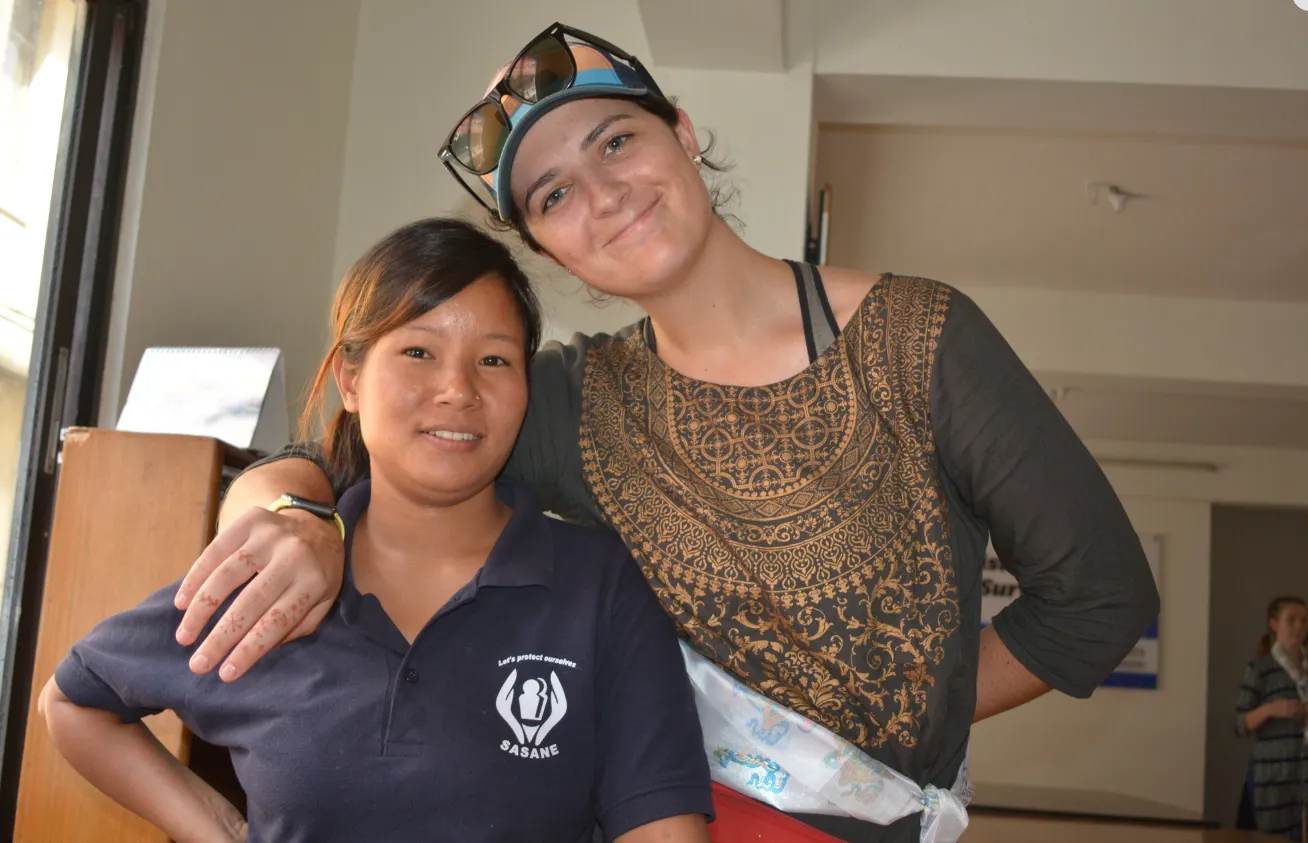
After her time at the shelter and her difficult return home, Sitashma connected with SASANE Sisterhood. This was not immediate — the timeline between trafficking, escape, shelter, family rejection, family reconciliation, and eventual career training spans years, not months.
SASANE offered something that neither the shelter nor her village could: a professional future that was not defined by her past.
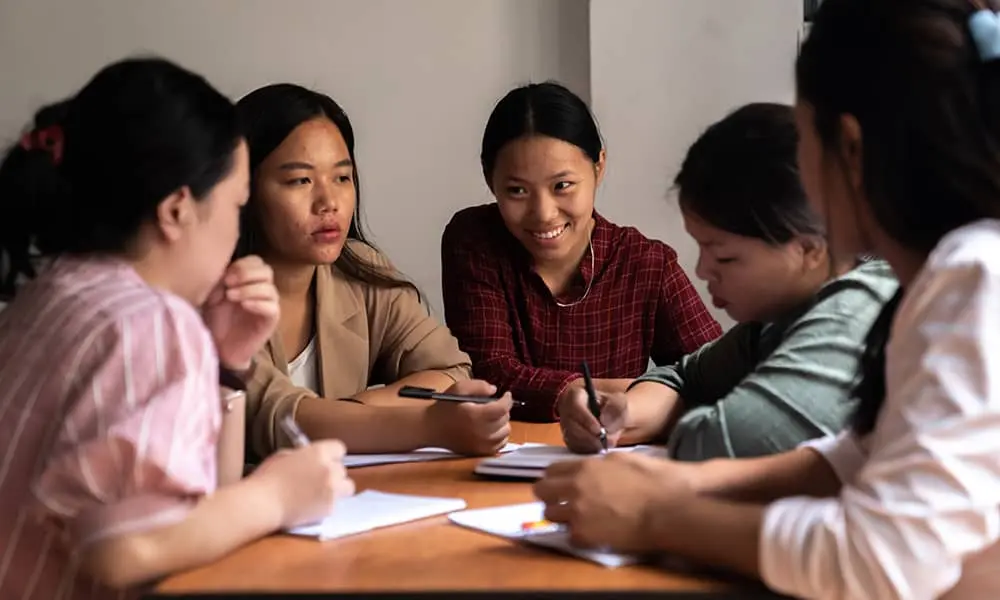
The 6-month training program that Sitashma entered covers:
- English language fluency — from conversational basics to the professional vocabulary needed to guide international clients
- Nepal's history, geography, and cultural heritage — the comprehensive knowledge base that the national certification exam demands
- First aid and emergency response — medical assessment, altitude sickness management, evacuation procedures
- Financial literacy — budgeting, banking, savings, tax compliance
- Trauma-informed professional development — building confidence, managing triggers, developing healthy client relationships
- Physical fitness — the endurance required for multi-day high-altitude treks
The training is rigorous. It has to be. The national certification exam administered by Nepal's Department of Tourism does not offer exceptions or accommodations for personal history. A survivor must pass the same exam as any other candidate. SASANE's decent pass rate demonstrates that with proper training support, survivors perform at or above the standard of conventional guide trainees.
Sitashma passed.
The Certification
When Sitashma received her government-issued trekking guide license, she joined a profession in which women hold fewer than 5% of positions nationally. She became one of approximately 200 women that SASANE has trained and certified since the organization's founding.
This license is not symbolic. It is a professional credential that authorizes her to lead international groups anywhere in Nepal — from the Everest Base Camp trail to the Annapurna Circuit, from Kathmandu Valley cultural tours to the remote Langtang Valley. It carries the same legal weight and professional recognition as a license held by any male guide in the country.
The significance of this cannot be overstated. A woman who was trafficked for exploitation now holds government certification to lead people through her own country. The power dynamic has completely inverted. She is no longer someone things happen to. She is the authority, the professional, the person in charge of other people's safety and experience.
Life as a Professional Guide
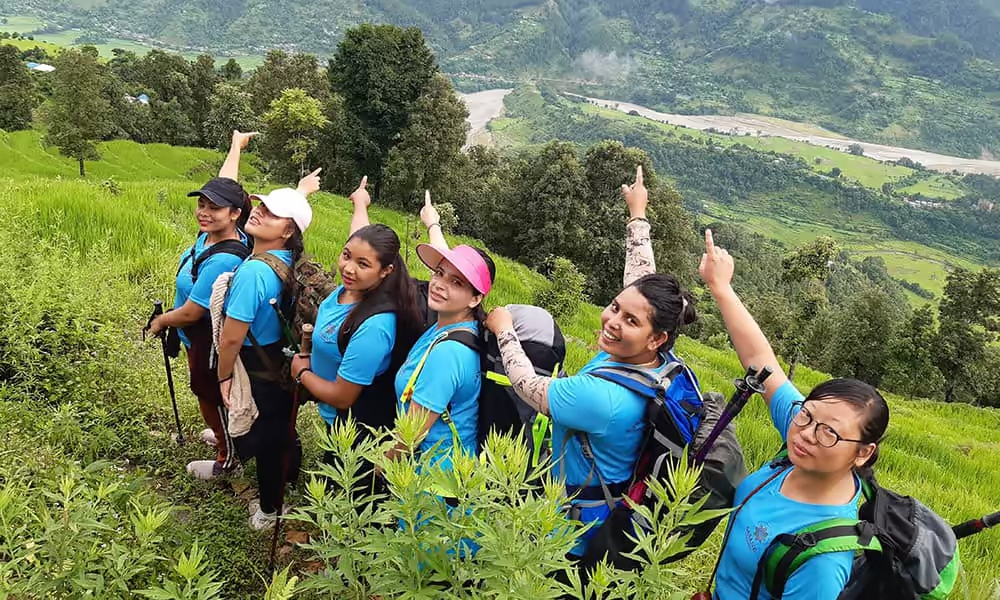
Today, Sitashma leads international travelers through Nepal. Her daily work involves:
- Route planning and logistics for multi-day treks
- Client safety assessment and management
- Cultural interpretation at heritage sites
- Language mediation between travelers and local communities
- Emergency decision-making at altitude
- Representing Nepal to visitors from around the world
She is paid a professional wage — not a stipend, not a charity payment, but the market rate for a certified guide. She manages her own finances. She makes career decisions. She mentors incoming SASANE trainees.
A Case Study describes SASANE guides like Sitashma as women placed "at the forefront of its operations and decision-making" — not in a tokenistic sense, but as the actual professional workforce that delivers the organization's core service.
When she guides travelers through the Kathmandu Valley or along Himalayan trails, she shares cultural knowledge, navigation expertise, and practical information. Whether she shares her personal story is entirely her decision. Some guides choose to. Some do not. The quality of guiding does not depend on disclosure — it depends on the same professionalism, knowledge, and warmth that defines any excellent guide anywhere in the world.
What Her Story Means for Tourism
Sitashma's journey from trafficking victim to certified professional illustrates what ethical tourism can accomplish when it is structured correctly. Her employment is not a marketing story — it is the business model working as designed.
Every traveler who books a SASANE experience is participating in this same system:
- Their booking revenue funded the training of a woman like Sitashma
- Their trip provides employment and fair wages to a certified professional
- Their spending reaches communities that were previously vulnerable to trafficking recruitment
- Their choice of operator over conventional companies shifts market incentives toward ethical employment
As Jeny Pokharel puts it: "Survivor-led enterprise is not charity — it is justice in action." Sitashma's story is what that justice looks like when it is implemented, funded, and sustained through tourism revenue rather than donor dependency.
The Village Today
Sitashma's relationship with her family and community has transformed. A woman who returns to her village as a government-licensed professional — one who brings international visitors (and their spending) through the community — occupies a fundamentally different social position than a woman who returns as a "victim."
This transformation is not instant. Social attitudes in rural Nepal change slowly. But economic reality is a powerful solvent of stigma. When a daughter's profession visibly benefits the family and the community, the narrative shifts from shame to pride. This is the long-term social change that SASANE's model creates — not through awareness campaigns or workshops, but through the simple, visible, undeniable fact of professional success.
The 21 communities where SASANE operates have seen this pattern repeated with over 200 women. Each success makes the next one easier. Each certified guide who returns to her region as a professional makes it harder for traffickers to sell the lie that leaving is the only option.
Beyond the Individual Story
Sitashma's story is powerful. But SASANE's model does not depend on exceptional individuals. It depends on a replicable system: identify survivors who want career opportunity → provide comprehensive professional training → support through government certification → connect to steady employment → reinvest revenue into the next cohort.
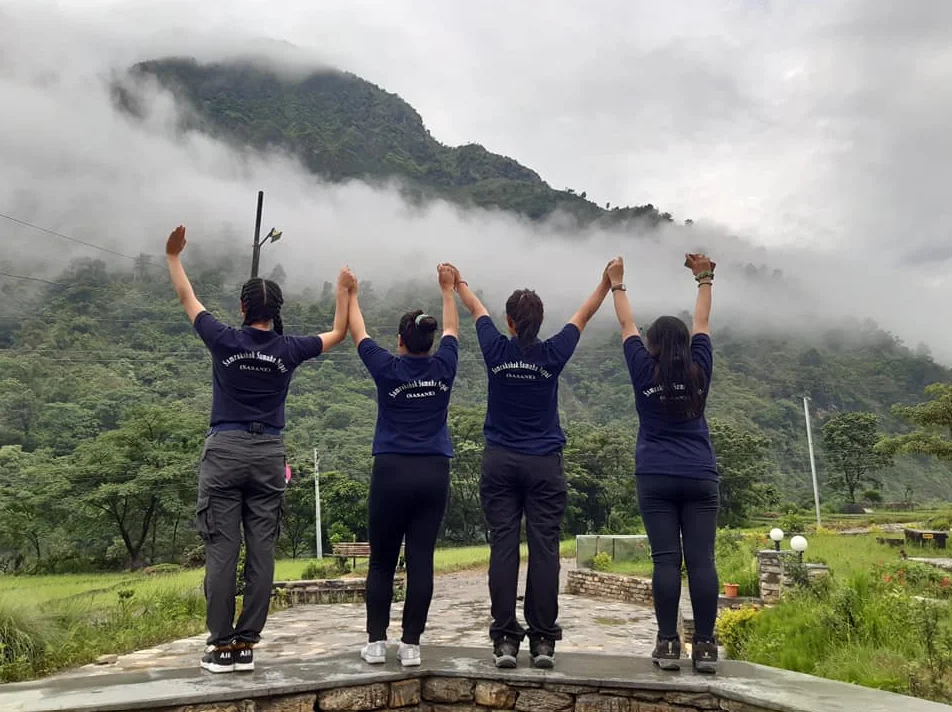
Over 200 women have followed this path. Each has her own story — her own history, her own escape, her own recovery timeline, her own professional strengths. SASANE does not require them to perform their trauma for visitors. It requires them to be professional, knowledgeable, reliable, and excellent at their jobs. Which they are.
The international recognition — the To Do Award, the To Do Award, the Booking.com Booster, the UNWTO recognition — validates not one individual's journey but the entire system that made it possible.
Sitashma's story matters because it is both extraordinary and replicable. Extraordinary in what she endured and overcame. Replicable in the system that supported her transformation. That system — funded by travelers who choose SASANE — continues creating the same opportunity for the next woman, and the next, and the next.
Book a trek led by our certified guides →
What Our Travelers Say
"Incredible staff and brilliant momo demonstration — hands on and fun. All profits feed back into the organisation and help save trafficked women or those suffering from domestic violence. Presentation was informative and gave lots of detail about the current trafficking situation in Nepal."
— Rachel, TripAdvisor (September 2022)
Frequently Asked Questions
Will my guide share her personal trafficking story during the trek? Only if she chooses to. SASANE guides are professionals — they share cultural knowledge, route information, and their passion for Nepal. Personal disclosure is always voluntary and on the guide's own terms. Your experience quality does not depend on trauma narratives.
How do I know the survivor stories shared publicly are consensual? SASANE has strict protocols around storytelling. No guide is ever required or pressured to share her history. Stories published in media (like Sitashma's in Tourism Watch) are shared with full informed consent. Guides control their own narratives.
Is it appropriate to ask my guide about her background? You can ask general questions, and your guide will answer what she is comfortable sharing. Do not press for details about trafficking experiences. Follow her lead — if she opens the topic, you can engage. If she does not, respect that professional boundary.
Does booking with SASANE help prevent future trafficking? Yes, directly. Tourism revenue creates economic alternatives in vulnerable communities, reducing the desperation that traffickers exploit. Additionally, booking revenue funds the next cohort of trainees — creating a multiplier effect where each trip supports both current guides and future ones.
How many survivors has SASANE trained in total? Over 200 women have completed the professional training program and received government certification. The program has been operating for over a decade, with approximately 4,900+ travelers served by these certified guides.
Can I support SASANE beyond booking a trip? The most impactful support is booking a trip — this provides sustainable revenue rather than one-time donations. However, for those who cannot travel, SASANE's story sharing and visibility work (sharing articles, recommending to travelers) also strengthens the mission.