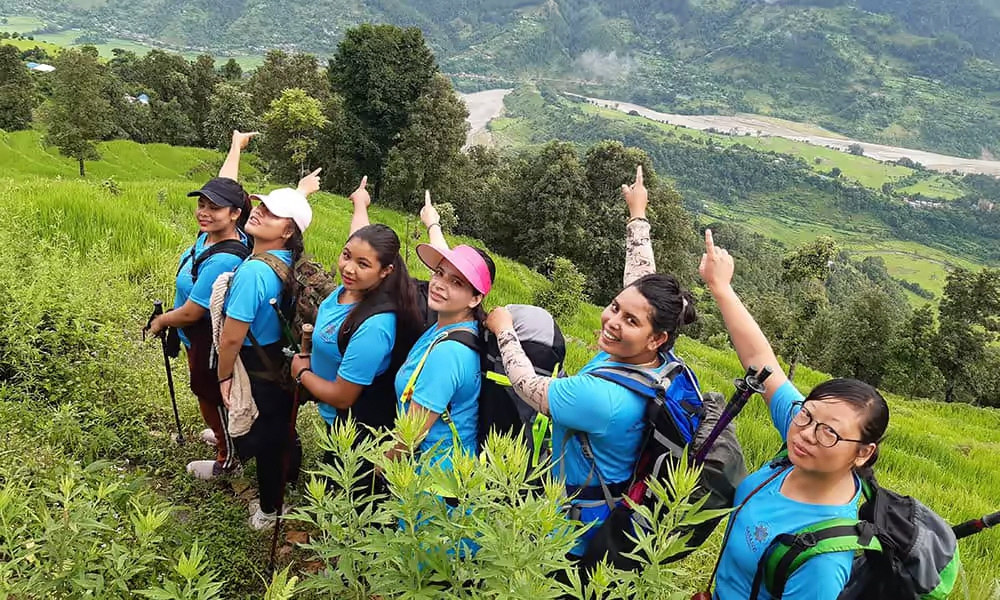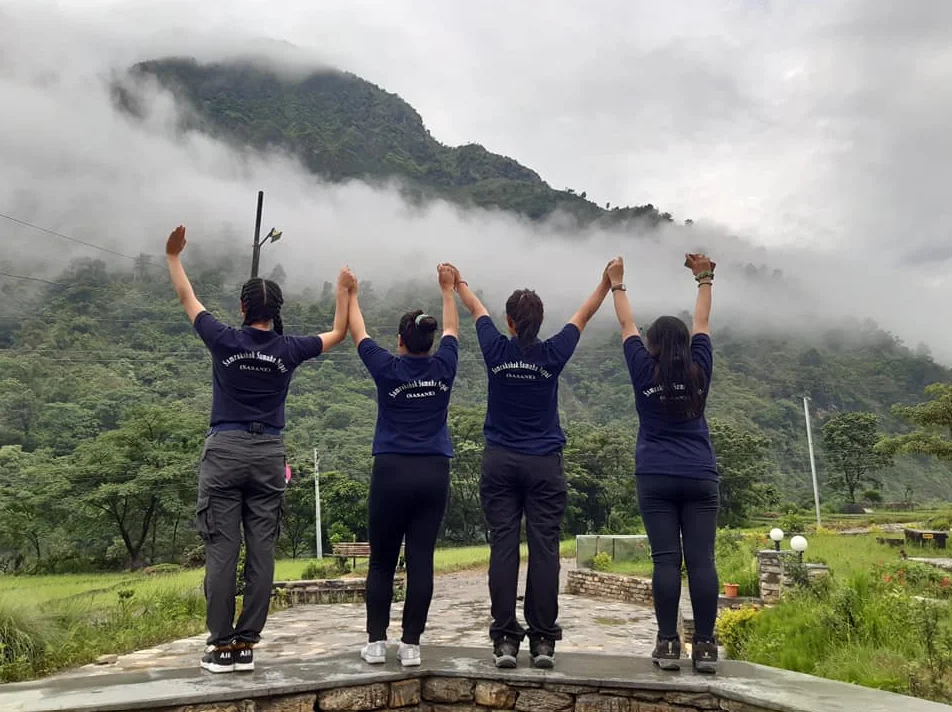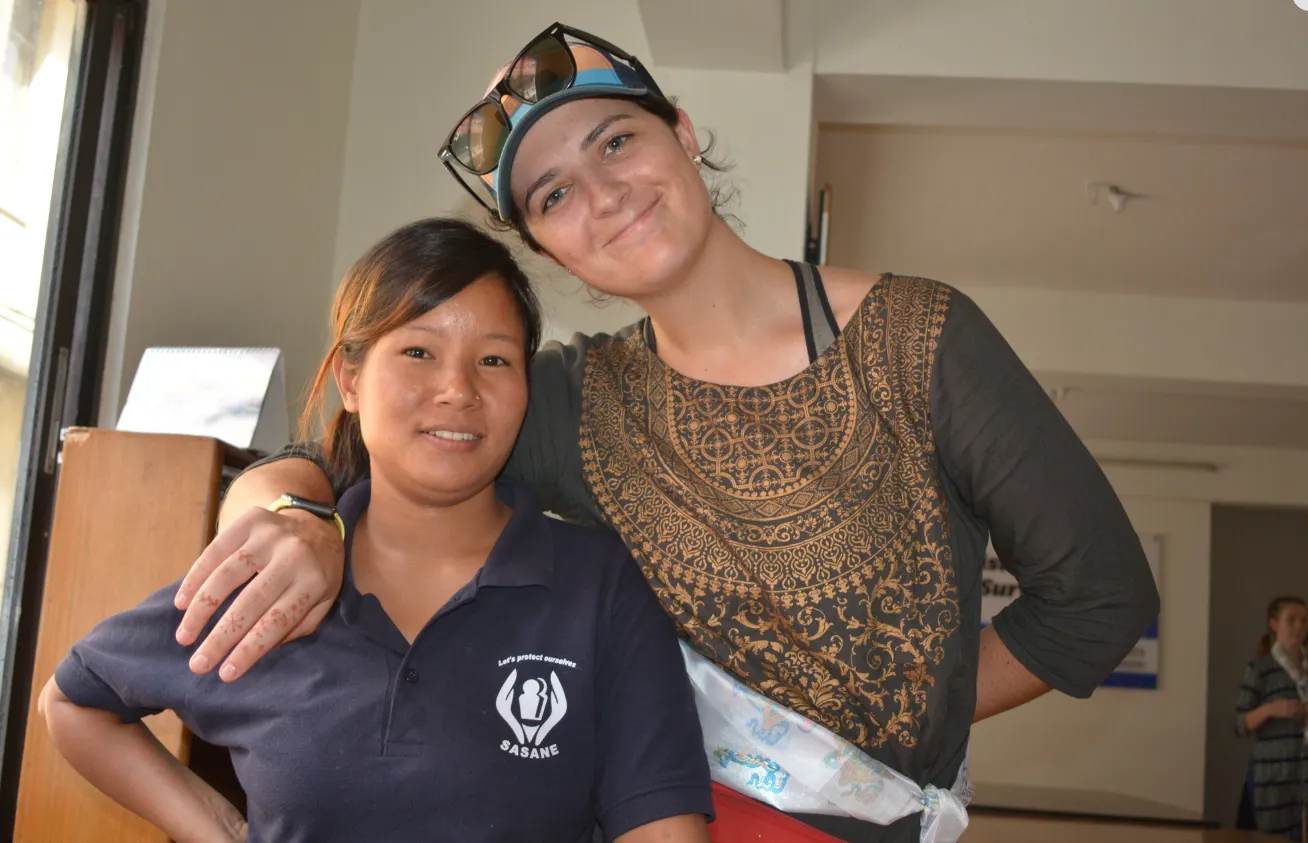
SASANE Sisterhood's training program is not a jobs scheme. It is not a workshop. It is not a six-week course with a certificate of attendance. It is a 6-month, full-time professional program through which women recovering from trafficking earn the government certification held by every professional guide in Nepal — and go on to lead SASANE's treks.
The program has graduated over 200 women since its founding. The pass rate on the national certification exam exceeds 90%. Graduates go on to lead international travelers through Himalayan treks, cultural tours, wellness retreats, and culinary experiences — earning professional wages that sustain families, fund communities, and demonstrate that survivor-led enterprise is economically viable.
Understanding how this program works — what it covers, why it takes 6 months, and what makes it different from conventional guide training — reveals why the international development community has taken notice. The Sustainable Hospitality Alliance recognized it as the world's leading model for female empowerment through hospitality. The To Do Award honored it for human rights in tourism.
Why 6 Months? The Logic of Duration
Conventional guide training programs in Nepal run 2-4 weeks as crash courses. They assume participants enter with basic education, English competency, physical fitness, and emotional stability. They teach only the technical material — geography, history, first aid, route planning — and send graduates into the field.
SASANE's 6-month programme is deliberately intensive and comprehensive. Many trainees have disrupted education. Most have limited English initially. All are processing trauma at some stage of recovery. The 6-month duration reflects the reality that professional development for trafficking survivors requires building foundational skills — language, confidence, physical fitness, emotional resilience — that other programs take for granted.
As Jeny Pokharel explains: "Empowerment cannot be rushed. When you are working with survivors of trafficking, progress is not linear, and healing does not follow a business timeline."
The 6 months accommodate:
- Periods where a trainee needs to pause for mental health support
- The time required to build English fluency from zero to professional conversational level
- Physical conditioning that must be gradual (not crash fitness programs)
- Multiple exam preparation cycles if needed
- The organic pace of trauma recovery alongside professional demands
Phase 1: Foundation (Months 1-2)
The first six months focus on three parallel tracks:
Language Development
English fluency is non-negotiable for guiding international travelers. Most trainees begin with minimal English — perhaps basic greetings and numbers. Within six months, they progress to conversational fluency sufficient for daily client interaction.
The teaching methodology is immersive and practical — no grammar textbooks or rote memorization. Instead:
- Daily conversation practice with English-speaking staff and volunteers
- Tourism-specific vocabulary: directions, weather, altitude, cultural sites, food, emergency terminology
- Role-play scenarios: greeting clients at the airport, explaining cultural protocols, handling complaints, communicating with hotels
- Reading and writing for practical purposes: itineraries, client communications, emergency reports
By month six, trainees can hold natural conversation with English speakers, understand and respond to complex questions about Nepal, and communicate clearly enough to manage client relationships professionally.
Physical Conditioning
Trekking in Nepal demands serious physical endurance. Multi-day routes at altitude — 3,000 to 5,000 meters — require cardiovascular fitness, leg strength, and altitude acclimatization skills. A guide must be the fittest person in the group, because she must be capable of assisting any client who struggles while maintaining safety for everyone else.
Physical conditioning begins gradually:
- Daily walking programs with progressive distance and elevation gain
- Strength training focused on legs, core, and load-bearing capacity
- Practice hikes in the Kathmandu Valley hills (Shivapuri, Nagarjun, Chandragiri)
- Introduction to altitude effects and acclimatization principles
- Proper nutrition education for sustained physical performance
Many trainees enter the program without any history of structured exercise. Bodies that have been through exploitation require careful, respectful physical development — not boot camp intensity. The six-month foundation allows this gradual build.
Trauma-Informed Personal Development
This track runs silently underneath the others. It is not a separate "therapy module" — it is an integrated support structure that recognizes training cannot happen in isolation from recovery.
Elements include:
- Access to professional counselors (not mandatory, but available)
- Peer support groups with other trainees
- Structured journaling and reflection
- Confidence-building through progressive challenges
- Development of personal agency and decision-making skills
- Boundary-setting practice (critical for client-facing work)
The Equality in Tourism organization has noted that this integration of trauma-informed care with professional training is what distinguishes SASANE from conventional skills programs that treat employment preparation as separate from personal recovery.
Phase 2: Technical Expertise (Months 3-4)
Once foundational skills are established, the program shifts to the technical knowledge required for the national certification exam:
Geography and Route Knowledge
Nepal's topography spans from 60 meters (Terai plains) to 8,849 meters (Everest summit). Guides must understand:
- Major trekking routes: Everest Base Camp, Annapurna Circuit, Langtang Valley, Manaslu, Upper Mustang
- Altitude zones and their characteristics (subtropical, temperate, alpine, arctic)
- Weather patterns and seasonal variations
- Flora and fauna at different elevations
- Water sources, campsites, and emergency shelter locations
- Alternative routes for different fitness levels or weather conditions
History and Cultural Heritage
Nepal's UNESCO World Heritage Sites, Hindu and Buddhist traditions, ethnic group diversity, architectural history, and contemporary cultural practices are all exam material. Guides study:
- The seven UNESCO World Heritage monument zones of Kathmandu Valley
- Major religious sites: Pashupatinath, Boudhanath, Swayambhunath, Lumbini
- Nepal's 125+ ethnic groups and their distinct traditions
- Historical periods from the Licchavi dynasty through the Shah monarchy to the republic
- Art and architecture: pagoda style, shikhara style, stupa symbolism
- Festivals, ceremonies, and their significance
First Aid and Emergency Response
This is arguably the most critical technical module. At altitude, medical emergencies can become fatal without prompt, correct intervention. Training covers:
- Acute Mountain Sickness (AMS) recognition and management
- HACE (High Altitude Cerebral Edema) and HAPE (High Altitude Pulmonary Edema) protocols
- Wound care, fracture stabilization, and evacuation procedures
- CPR and basic life support
- Emergency communication (radio, satellite phone, helicopter evacuation protocols)
- Client medical assessment and medication awareness
- Hypothermia and frostbite treatment
- Gastrointestinal illness management (common at altitude)
Professional Guiding Skills
Beyond knowledge, guides need operational competence:
- Group management and dynamics
- Time management on multi-day itineraries
- Client communication and expectation setting
- Budget management for trek expenses
- Working with porters, teahouse owners, and local communities
- Conflict resolution
- Packing guidance and client preparation
Phase 3: Certification and Deployment (Months 5-6)
The final phase focuses entirely on exam preparation and professional readiness:
Exam Preparation
The national certification exam, administered by Nepal's Department of Tourism, covers all technical areas: geography, history, first aid, emergency management, route knowledge, and practical assessment. It is the same exam taken by every guide candidate in the country — no exceptions, no accommodations.
SASANE prepares trainees through:
- Mock exams under timed conditions
- Individual tutoring on weak areas
- Practical assessments simulating real scenarios
- Review sessions with graduated guides who share exam strategies
- Multiple preparation cycles for trainees who need additional time
The 90%+ pass rate speaks to the program's rigor. These women are not given certificates for attendance — they earn them by meeting the national standard.
Supervised Field Experience
Before sitting the exam, trainees complete supervised treks and tours:
- Assisting experienced SASANE guides on active trips
- Leading portions of trips under mentor observation
- Receiving real-time feedback on client interaction, safety decisions, and cultural interpretation
- Building confidence through progressive responsibility
This apprenticeship model ensures that no guide enters professional practice unprepared. By the time a woman sits her certification exam, she has already guided real travelers under real conditions.
Career Planning
Graduation is not the end — it is the beginning of a professional career. The final phase includes:
- Financial planning for independent guide income
- Professional networking within Nepal's tourism industry
- Specialization selection (trekking, cultural touring, wellness, culinary)
- Mentorship matching with senior SASANE guides
- Introduction to the booking and client management systems
After Certification: What a Career Looks Like
A certified SASANE guide enters professional practice with:
- Government-recognized license valid anywhere in Nepal
- Established client pipeline through SASANE's booking system
- Fair professional wages (not charity rates)
- Ongoing professional development opportunities
- Peer community of 200+ other certified women guides
- Mentorship responsibilities for incoming trainees
Guides specialize based on their strengths and interests. Some focus on high-altitude trekking — the Annapurna and Langtang routes. Others develop expertise in cultural walking tours. Some become wellness facilitators, leading meditation retreats. Others lead cooking classes that combine culinary skill with cultural storytelling.
The career trajectory is not static. SASANE guides grow into team leaders, training mentors, operations managers, and organizational decision-makers. The SHA case study specifically notes that SASANE "places women at the forefront of its operations and decision-making" — this is not aspirational language. It is the organizational structure.
What Makes This Different
Conventional guide training programs in Nepal produce competent professionals. SASANE's program produces the same competent professionals while simultaneously:
- Addressing root causes of trafficking — every graduate becomes a visible counter-narrative in her community
- Creating prevention through aspiration — young girls in vulnerable communities see a career path that does not require leaving home
- Building financial sustainability — the program is funded by tourism revenue from travelers who choose SASANE, not by donor grants
- Challenging gender norms — women hold fewer than 5% of guide licenses nationally; every SASANE graduate shifts that percentage
- Proving the model — over 200 graduates, 4,900+ travelers served, 6+ global awards validates that this approach works
Jeny Pokharel often says: "My ambition is for SASANE to become the leading model of survivor-led social enterprise in the world, demonstrating that sustainable tourism can be both commercially viable and deeply impactful."
Those survivor guides — and the travelers who fund the next — are how that ambition becomes reality, one woman and one government license at a time.
Book a trek and fund the next trainee →
What Our Travelers Say
"The momo cooking class and Nepali lunch provided by the sisters at their base in Pokhara was a really great afternoon, the work done by the organisation is really admirable and the sisters we met were very welcoming and provided an informative presentation also."
— Louise, TripAdvisor (January 2023)
Frequently Asked Questions
What qualifications do trainees need to enter the program? There are no educational prerequisites. Trainees are trafficking survivors referred through partner organizations (through partner organizations) who express interest in a tourism career. The program builds all necessary skills from foundation level regardless of prior education.
How is the program funded? Through tourism revenue. Every trek, tour, and experience booked with SASANE generates income that directly funds training operations, trainee stipends, and program resources. This sustainable funding model reduces dependency on grants and donations.
What happens if a trainee does not pass the national exam? The program provides additional preparation time and support for re-examination. No trainee is abandoned for failing on the first attempt. The 90%+ pass rate reflects thorough preparation, but SASANE accommodates different learning timelines.
Can someone apply to the program directly? Trainees are typically referred through SASANE's partner network of anti-trafficking organizations. If you know a survivor who may benefit, contact SASANE directly — referral pathways exist outside formal partner channels.
How long after graduation before a guide leads trips independently? Most graduates begin co-leading within weeks of certification, as they have already completed supervised field experience during Phase 3. Full independent guiding typically begins within 1-3 months of certification, depending on route complexity and individual readiness.
Do guides continue professional development after certification? Yes. Senior guides attend advanced training in specializations (wilderness first responder updates, new route preparation, leadership development) and take on mentorship roles with incoming trainees. The learning does not stop at certification.