Long before Nepal became synonymous with adventure trekking, it was a destination for spiritual pilgrimage. This is the birthplace of Siddhartha Gautama — the Buddha — born in Lumbini in the 6th century BCE. The high Himalayas have sheltered Hindu and Buddhist monasteries for over two thousand years. The vast silence above the treeline, broken only by wind and prayer flags, has drawn seekers of inner peace from every continent and every tradition.
Today, wellness tourism is one of Nepal's fastest-growing sectors. The Global Wellness Institute estimates that wellness tourism generates over $800 billion annually worldwide, and Nepal's positioning — ancient spiritual lineage combined with dramatic altitude and remoteness from urban noise — makes it uniquely competitive in this space.
But most meditation retreats in Nepal follow a familiar template: foreign-owned yoga studios in Pokhara, ten-day Vipassana courses in silence centers, or luxury spa resorts with Himalayan branding. SASANE offers something fundamentally different — and the difference matters.
Why Nepal for Meditation and Mindfulness
Nepal is not simply a scenic backdrop for meditation practice. It offers specific conditions that are physiologically and psychologically distinct from studio-based practice:
Altitude and oxygen reduction. Above 2,000 meters, reduced oxygen naturally slows the heart rate and deepens breathing without any conscious effort. The body begins doing what meditation teachers spend years trying to teach students: slowing down. Research published in the Journal of Alternative and Complementary Medicine has documented that meditation at altitude produces deeper alpha brain wave states compared to sea-level practice.
Silence that is genuinely silent. Urban meditation spaces work against constant background noise — traffic, construction, neighbors, digital notifications. Above the treeline in the Himalayas, the absence of sound is not manufactured by noise-canceling headphones. It is absolute. This acoustic environment creates conditions that even the most disciplined city meditators rarely experience.
Spiritual lineage that is alive, not museumified. Nepal's Buddhist and Hindu traditions are not historical artifacts displayed for tourists. They are active, daily, communal practices. When you meditate at a working monastery near Boudhanath, you are not performing a cultural appropriation — you are joining a community that has been doing this for centuries and welcomes sincere practitioners.
Lumbini — birthplace of the Buddha. Nepal is the only country in the world that can claim this. The archaeological site in the southern Terai contains the exact location where Siddhartha was born, surrounded by monasteries built by Buddhist nations from around the world. Meditating here carries a significance that no retreat center in Bali or California can replicate.
Natural visual beauty that requires no decoration. Mountain views, rhododendron forests, glacial lakes, and terraced hillsides provide natural focal points for meditation that surpass any designed environment. The Himalayan landscape itself becomes the practice space.
What a SASANE Wellness Journey Includes
SASANE's retreats are not luxury spa packages with Himalayan branding. They are intentional, grounded, and guided by women whose relationship with mindfulness was forged through necessity — not trend, not certification courses, not Instagram aesthetics.
Our wellness journeys are structured around progressive depth:
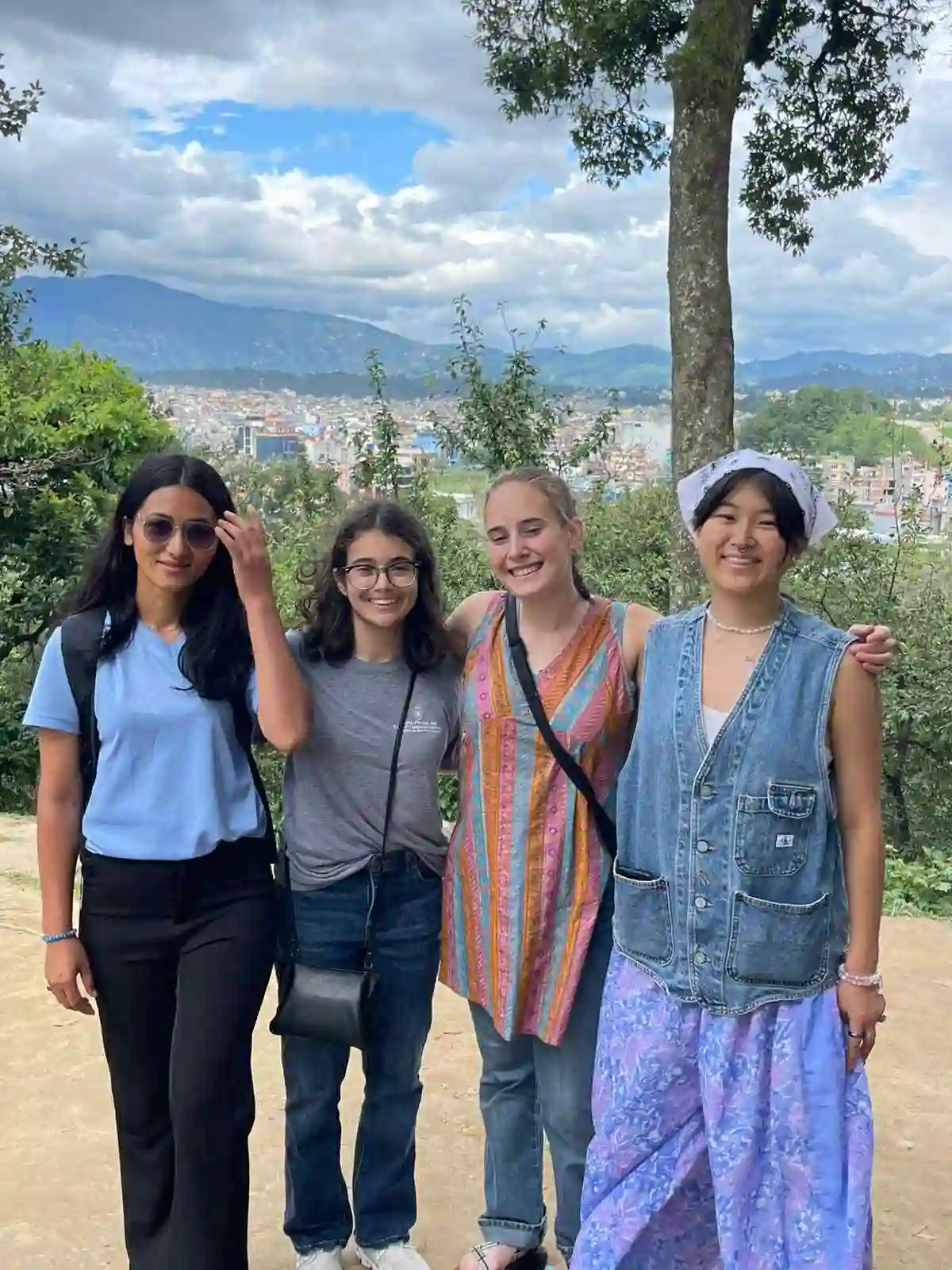
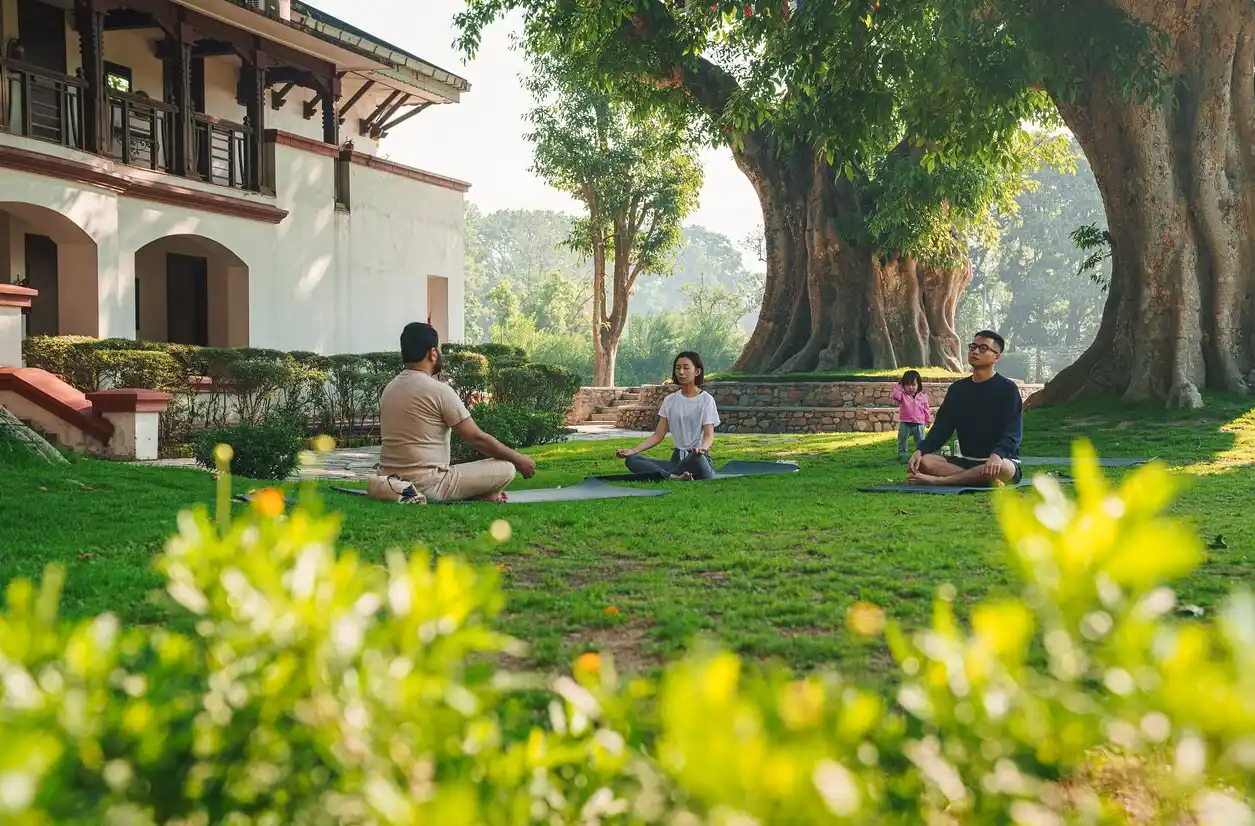
Morning practice (sunrise): Guided yoga and breathwork overlooking the Annapurna range from Pokhara or the Kathmandu Valley rim near Nagarkot. Sessions are designed for all levels — no prior yoga experience required.
Walking meditation (mid-morning): Gentle trails through rhododendron forests, guided by a certified SASANE trek leader who sets pace, marks stopping points for stillness, and teaches awareness of breath, footfall, and natural sound. These are not strenuous hikes — they are contemplative walks with purpose.
Monastery sessions (afternoon): Scheduled visits to working Buddhist monasteries where resident teachers offer introduction to meditation techniques — Vipassana (insight meditation), Shamatha (calm-abiding), or Metta (loving-kindness) depending on the retreat focus. Monasteries near Boudhanath, Kopan, and Namo Buddha are regularly included.
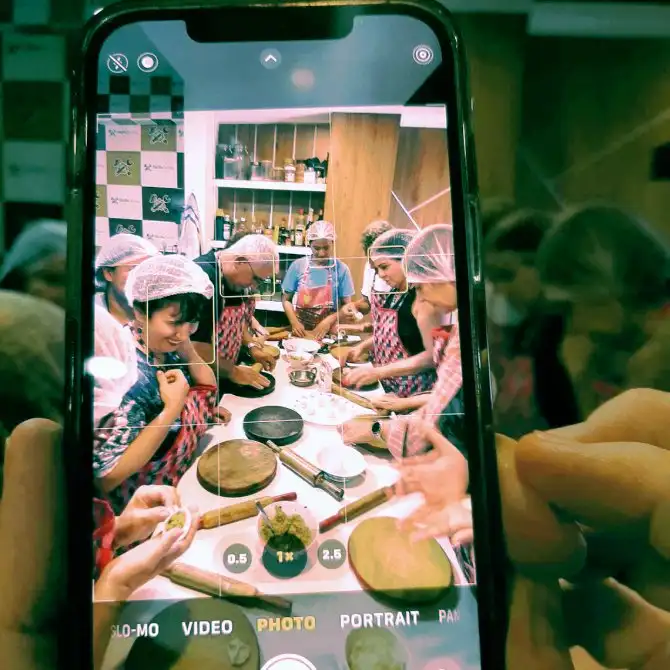
Ayurvedic meals: Prepared by our culinary team using seasonal, locally sourced ingredients following Ayurvedic principles — warming foods at altitude, cooling foods in the valley, herbal infusions throughout the day. No processed food. No imported ingredients. Everything is fresh, local, and designed to support meditation practice.
Journaling and structured silence: Dedicated time for reflection without the pressure to perform or share. Solo travelers particularly value these periods — they provide genuine solitude in a supported environment.
Evening storytelling circles (optional): Trauma-informed group conversations guided by SASANE facilitators. Participation is never mandatory. These sessions create space for processing experiences, asking questions, and connecting with other travelers. They are not therapy — they are community.
Retreats range from 3-day introductions based in the Kathmandu Valley to 10-day immersive journeys combining gentle trekking with daily meditation practice at progressively higher altitudes.
The Guides Who Understand Healing
This is where SASANE's wellness retreats differ from every other operator in Nepal. Our guides are not yoga influencers or certified instructors from Western training programs. They are women — trafficking survivors turned professionals — who used meditation, breathing exercises, and mindfulness as part of their own recovery from trauma.
As founder Jeny Pokharel has shared: "Empowerment cannot be rushed. When you are working with survivors of trafficking, progress is not linear, and healing does not follow a business timeline." The women who guide SASANE wellness experiences have lived this truth. When they lead a body scan at 3,000 meters, they are not reading from a certification manual — they are sharing a practice that helped them reclaim their own bodies, their own choices, their own futures.
This dimension — being guided by women who genuinely understand the need for healing, not as concept but as lived experience — is what draws solo female travelers to SASANE over conventional retreat centers. There is no performance here. No judgment. No spiritual hierarchy. Just mountains, breath, and women holding space for each other.
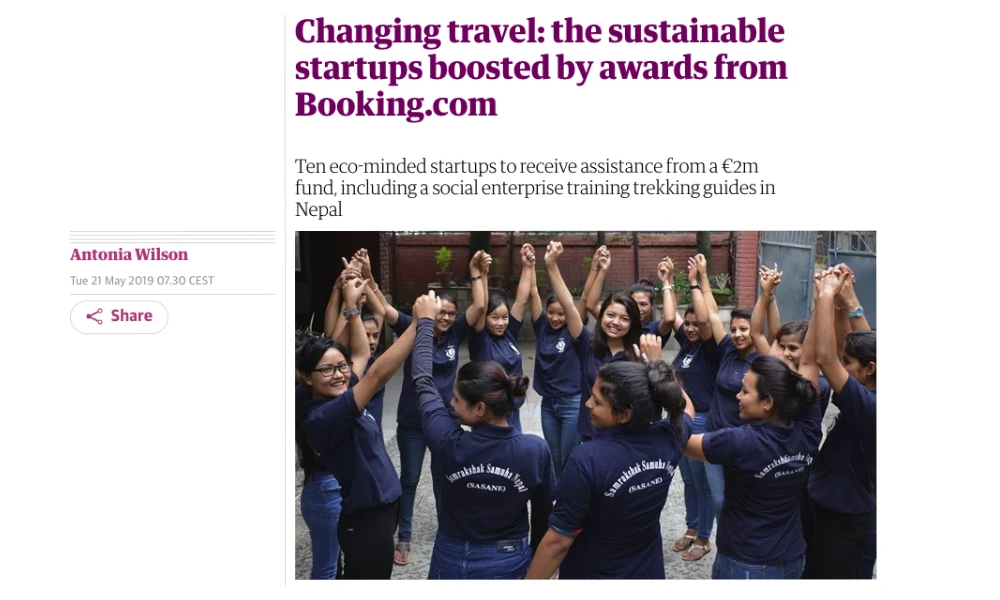
The Sustainable Hospitality Alliance has recognized this approach as part of SASANE's award-winning model — specifically noting that the organization "places women at the forefront of its operations and decision-making" and promotes travel to "lesser-known destinations to create sustainable economic growth while protecting Nepal's rich cultural heritage."
Types of Meditation Available in Nepal
Nepal offers access to authentic traditions that are difficult or impossible to access elsewhere:
Vipassana (Insight Meditation): The technique taught by S.N. Goenka centers worldwide. Nepal has multiple Vipassana centers offering 10-day silent courses. SASANE integrates shorter Vipassana sessions (1-3 days) into wellness journeys for travelers who cannot commit to the full course.
Tibetan Buddhist meditation: Practiced at monasteries across the Kathmandu Valley and in the Himalayan highlands. Includes Shamatha (calm-abiding), analytical meditation, and visualization practices. Kopan Monastery offers regular courses for international visitors.
Yoga and pranayama: Both classical (Hatha, Iyengar) and contemporary styles are available across Nepal. Mountain yoga — practiced outdoors at altitude — combines physical practice with natural environment in ways that indoor studios cannot replicate.
Sound healing: Tibetan singing bowls, which originated in this region, are used in therapeutic sessions throughout the Kathmandu Valley. The resonance of metal bowls in mountain air creates a distinct vibrational experience.
Walking meditation: Perhaps the most natural form of meditation in a trekking country. SASANE's approach integrates mindful walking into every trek — not as an add-on module, but as a fundamental mode of experiencing the trail.
Who This Is For
You do not need meditation experience. You do not need to be flexible, spiritual, or silent by nature. SASANE wellness retreats welcome:
- Solo women travelers seeking safe, meaningful experiences guided by women who understand vulnerability and strength in equal measure
- First-time meditators curious about practice without dogma, jargon, or pressure to perform
- Experienced practitioners seeking the altitude, silence, and spiritual lineage that deepen existing practice
- Small groups and couples wanting customized itineraries that blend trekking with contemplation
- Anyone navigating grief, burnout, career transition, or the simple human desire to pause — no diagnosis required, no spiritual prerequisites needed
Practical Information
- Best seasons: October-November (clear skies, comfortable temperatures) and March-April (rhododendron blooms, warming days). Ask us for the seasonal offerings →
- Fitness level: Low to moderate. Wellness retreats prioritize inner work over physical challenge. Walking is gentle — no summit attempts.
- Group size: 2-8 travelers per retreat (private retreats available)
- What to bring: Comfortable loose clothing, a journal, an open mind. All meditation equipment (cushions, mats, blankets) is provided. Ask us for full packing guidance →
- Accommodation: Clean, comfortable guesthouses and lodges — not luxury resorts, not austere dormitories. The middle path.
- Duration: 3 days (introduction) to 10 days (immersive journey)
The Mountains Hold Space
Nepal meets you where you are. Whether you have meditated for twenty years or have never sat still for five minutes, the Himalayas do not ask for credentials. They offer what they have always offered: perspective, proportion, and the visceral reminder that human worries are very small against geological time.
When that perspective comes paired with the quiet courage of women who have walked through the worst of humanity and found peace — not as philosophy but as daily practice — the experience stays far longer than any app notification, retreat certificate, or Instagram post ever could.
As the Meaningful Business profile noted about SASANE's approach: "The impact goes beyond financial security. Women transform how they see themselves — from survivors of exploitation to architects of their own future."
That transformation is not something you observe from the outside. When you walk these trails with these women, you feel it. And something in your own stillness deepens because of it.
What Our Travelers Say
"Amazing and important work supporting women across Nepal. Great food, great cause — definitely recommend for your trip!"
— bhopson192, London, UK, TripAdvisor (April 2026)
Frequently Asked Questions
Do I need meditation experience to join a SASANE wellness retreat? No. Our retreats welcome complete beginners alongside experienced practitioners. Guides adapt sessions to your level, and there is no pressure to achieve any particular state. You simply show up and participate at your own pace.
Is this a silent retreat? Not entirely. SASANE retreats include periods of structured silence (especially during walking meditation and morning practice) but also include conversation, storytelling, and cultural engagement. It is a balanced approach designed for travelers, not monastery residents.
Will I be expected to discuss personal trauma? Never. Evening circles are optional, and no one is ever asked to share anything personal. The retreat creates space for reflection — what you do with that space is entirely your choice.
Can solo women travelers join safely? Absolutely. Many of our wellness guests are solo women travelers. The retreat environment is designed to feel safe, supported, and welcoming. All guides are women, and group sizes are kept small.
What is the physical fitness requirement? Low to moderate. Walking meditation involves gentle trails — not high-altitude trekking. If you can walk for 2-3 hours at a comfortable pace, you have sufficient fitness for our standard wellness retreats.
How does a wellness retreat support SASANE's mission? Every retreat booking pays fair professional wages to the survivor guides who lead it — and funds the next woman's path into the work. Your participation in a wellness experience creates the same anti-trafficking economic impact as booking a trek — because the guides leading your retreat are the same professionals whose training was funded by previous travelers.