Human trafficking remains one of the most devastating human rights crises in South Asia. In Nepal, an estimated 35,000 people are trafficked annually according to the National Human Rights Commission. Women and girls from rural mountain communities — areas with limited economic opportunity, disrupted education systems, and post-earthquake vulnerability — are disproportionately targeted. They are lured with promises of employment in cities or across borders, only to be forced into sexual exploitation, domestic slavery, or bonded labor.
For decades, the response to trafficking in Nepal has been reactive: rescue operations, shelter homes, short-term rehabilitation, and awareness campaigns. These interventions save lives, but they rarely address the root cause — the economic vacuum that makes trafficking possible in the first place. When families have no sustainable income, when daughters have no career options, when villages offer nothing but subsistence farming, predators find easy prey.
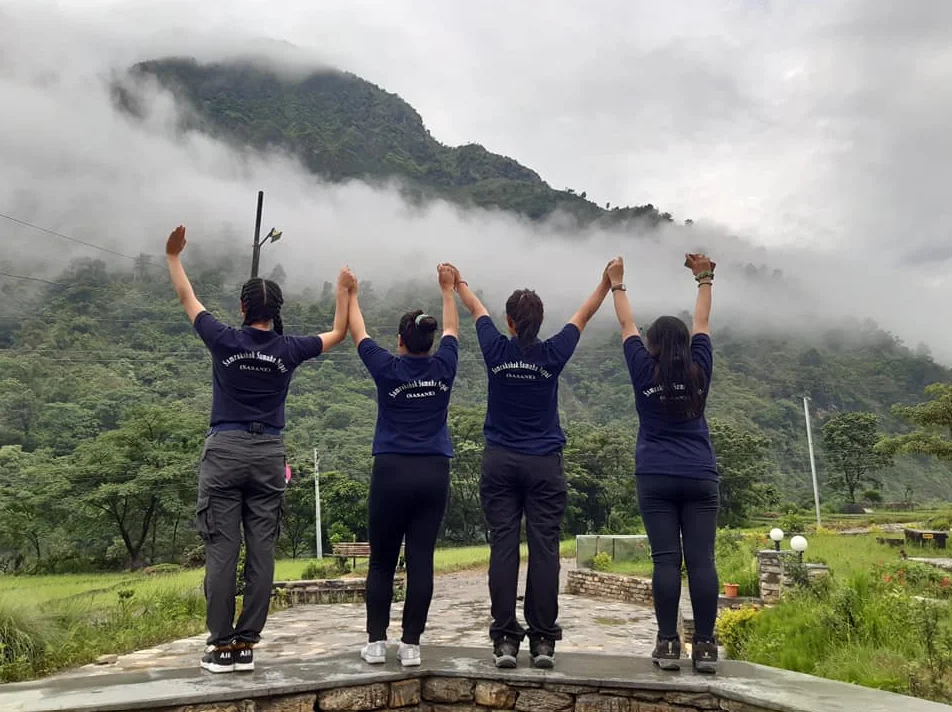
SASANE Sisterhood was founded on a radical premise: that tourism — Nepal's largest foreign exchange earner — can be restructured as a direct intervention against trafficking. Not tourism as charity. Not tourism as voluntourism. Tourism as dignified professional employment for the very women that trafficking sought to exploit.
The Model: From Rescue to Revenue
The conventional anti-trafficking pipeline looks like this: rescue → shelter → counseling → return to village → vulnerability remains unchanged.
SASANE's model breaks this cycle by inserting a critical missing step: professional career development. The pipeline becomes: rescue → rehabilitation → 6-month professional training → government certification → dignified employment → financial independence → community transformation.
This is not a jobs program. It is a complete economic restructuring that places survivors at the center of Nepal's $2 billion tourism industry — not as beneficiaries, but as professionals, leaders, and decision-makers.
As founder Jeny Pokharel explaines : "We founded SASANE Sisterhood because I could no longer ignore the gap between rescue and real reintegration for female survivors of trafficking in Nepal. Too often, support ends at rehabilitation, but economic independence, dignity, and social belonging require much more than temporary assistance."
Why Tourism Specifically?
Nepal's tourism sector employs over one million people and contributes approximately 7.9% of GDP. Yet it has been historically male-dominated — women hold fewer than 5% of licensed trekking guide positions nationally. This gender gap represents both a systemic failure and an enormous opportunity.
Tourism works as an anti-trafficking intervention because:
1. It addresses root causes directly. When a village has a functioning tourism economy — teahouses, guide services, culinary experiences, homestays — families generate income locally. The economic desperation that makes daughters vulnerable to traffickers diminishes. Tourism revenue stays in the community rather than flowing to distant city employers.
2. It provides visible, respected employment. A trafficking survivor who returns to her village as a government-licensed guide earning a professional income transforms community perception. She is no longer defined by what happened to her. She is a professional who brings foreign visitors — and their spending — to her village. Social stigma gives way to economic respect.
3. It scales sustainably. Unlike donor-dependent programs that collapse when funding ends, a tourism enterprise generates its own revenue. Every trek booked funds the next cohort of trainees. The model is self-perpetuating.
4. It builds transferable skills. Guide training develops English fluency, financial management, first aid certification, group leadership, and cross-cultural communication — skills that open doors far beyond tourism.
5. It creates prevention through aspiration. When young girls in vulnerable communities see a SASANE graduate leading international travelers through their village, they see a career path that does not require leaving home. Trafficking prevention becomes a byproduct of economic possibility.
The Numbers Behind the Impact
Since its founding, SASANE has built an impact record that speaks for itself:
- 200+ trafficking survivors now working as professional guides and decision-makers — with every trip funding the next
- 4,900+ international travelers served — each one directly funding survivor livelihoods
- 21 communities reached across Nepal's most trafficking-vulnerable regions
- 6+ global awards recognizing the model's effectiveness and innovation
- Government-certified guides holding the same national license as any professional guide in Nepal
- 90%+ exam pass rate — a testament to the rigor of the training program
But the most meaningful metric may be the hardest to quantify: trafficking vulnerability has measurably declined in communities where SASANE operates active tourism routes. When tourism provides stable income, the economic pressure that feeds trafficking weakens at its source.
A Women-Led Revolution in Nepal's Tourism Industry
What makes SASANE fundamentally different from traditional anti-trafficking NGOs is agency. This is not a rescue organization. It is a women-led enterprise where survivors are not beneficiaries — they are employees, decision-makers, mentors, and eventually managers.
Jeny Pokharel describes the philosophy clearly: "What I am trying to solve is not only unemployment, but the deeper issue of how society views survivor women. I have seen how stigma follows them long after they leave trafficking situations. They are often defined by what happened to them, rather than by their strength, skills, and potential."
Through SASANE, this identity transformation is structural:
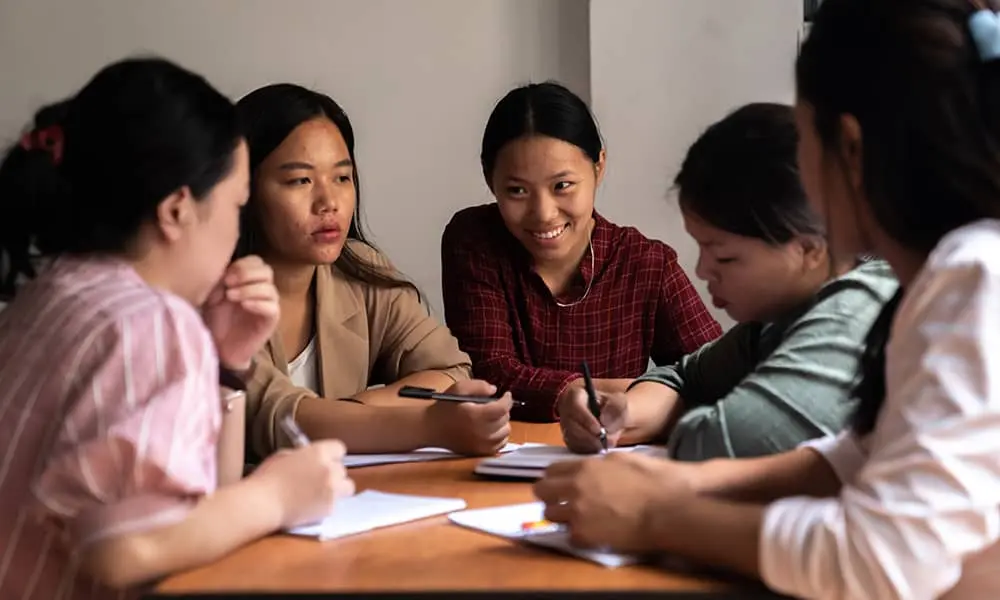
- Survivors choose their training pathway (trekking, hospitality, culinary arts)
- Guides manage their own client relationships and itineraries
- Senior guides mentor incoming trainees
- The organization places women at the forefront of operations and decision-making (per SHA case study)
Every trek booked, every cooking class attended, every cultural tour walked with SASANE channels revenue directly into this system — funding training, fair wages, legal support, counseling integration, and community prevention programs.
The Routes Where Change Happens
SASANE's trekking experiences are not separate from the anti-trafficking mission — they are the mission in action. The Sustainable Hospitality Alliance case study highlights specific routes:
- Nagarkot pilgrimage trek — a two-day journey through communities directly served by SASANE's prevention programs
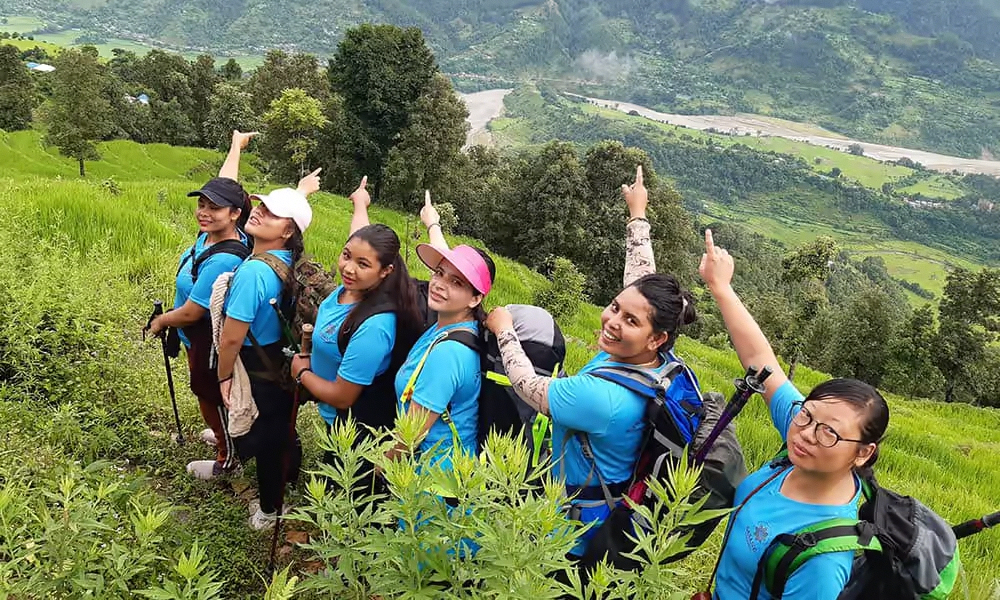
- Ghorepani Poonhill — a seven-day hike through rural villages where tourism revenue creates alternatives to trafficking vulnerability
- Kathmandu Valley cultural tours — city and heritage experiences led by survivor guides who know every temple, backstreet, and artisan workshop
- Langtang Valley treks — high-altitude journeys through communities devastated by the 2015 earthquake, where tourism rebuilds both infrastructure and hope
These are not packaged poverty tours. Travelers connect with Nepal's culture, landscapes, and people through authentic experiences guided by professionals. The anti-trafficking impact happens in the background — through fair wages, community revenue, and the visible proof that women can lead.
Global Recognition: Why the World Is Watching
The international development and tourism communities have taken notice of SASANE's model — not because it is new, but because it works. The recognition includes:
To Do Award 2023 — Human Rights in Tourism. SASANE is the first and only Nepali enterprise to win this prestigious award, presented at ITB Berlin. ITB Berlin described SASANE as an organization that "trains local women to become tour guides for the rural mountain villages of Nepal."
Booking.com Booster 2019 — selected as one of the top 10 sustainable tourism startups globally. The Guardian featured SASANE under the headline "Changing travel: the sustainable startups."
UNWTO Award for Excellence and Innovation — recognition from the United Nations World Tourism Organization for excellence in tourism innovation.
Equality in Tourism called SASANE "a model of gender equity in action — proving that survivor-led enterprises can reshape an entire industry."
The International Labour Organization (ILO) has cited SASANE in research on tourism's role in human trafficking prevention, validating the economic logic of the model at the highest institutional level.
What Travelers Actually Experience
A common misconception is that traveling with SASANE means engaging with trauma. It does not.
As Jeny Pokharel has emphasized: "We are challenging narratives, reshaping industries, and proving that survivor-led enterprise is not charity — it is justice in action." Travelers experience professional guiding, cultural depth, and authentic Nepali hospitality. The anti-trafficking impact is a structural outcome of the business model, not a performance put on for visitors.
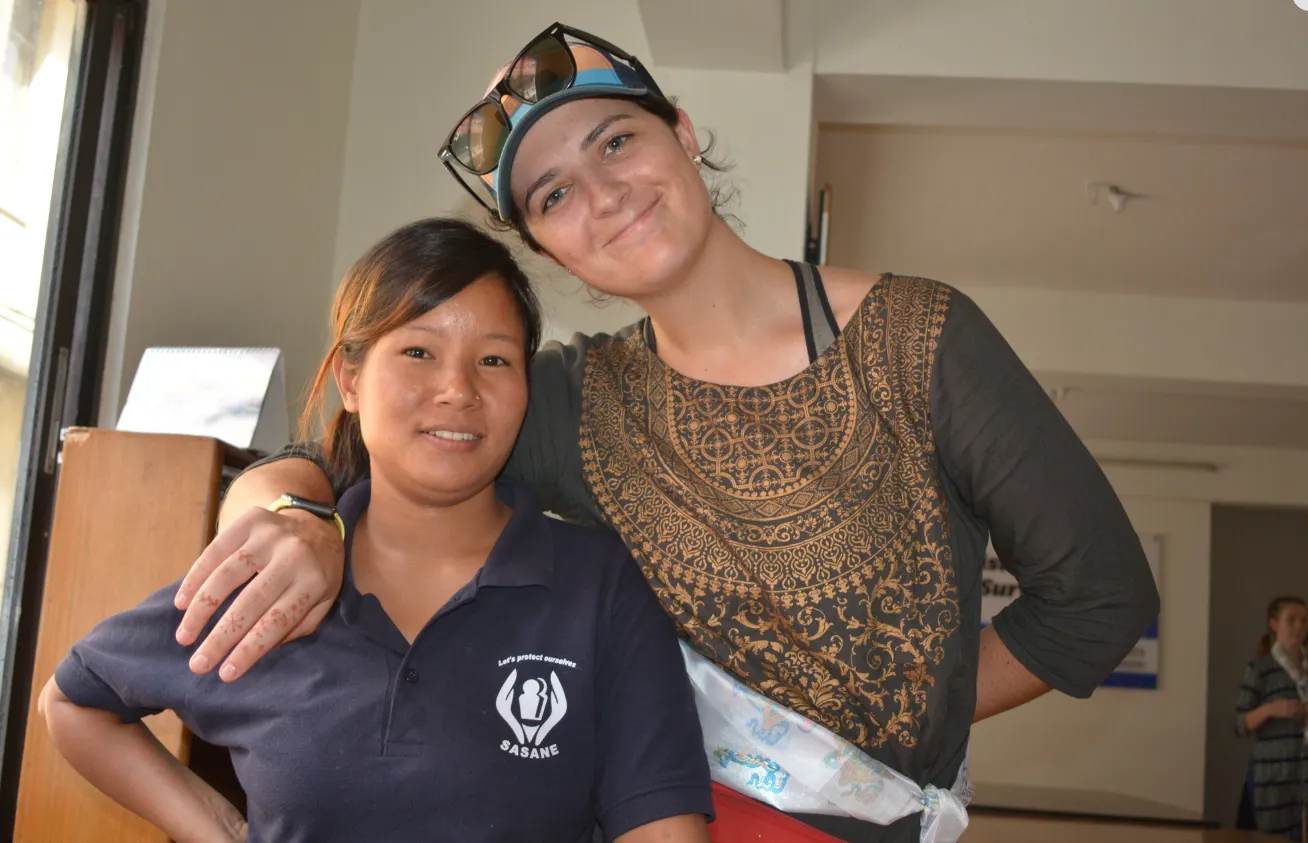
Your guide may share her story if she chooses to — on her terms, at her comfort level. Or she may simply be the most knowledgeable, prepared, and passionate guide you have ever trekked with. Either way, every booking directly funds the next woman's training, certification, and path to independence.
The Uncomfortable Truth About Ethical Travel
The travel industry markets sustainability aggressively. "Eco-lodges," "responsible tours," and "community-based tourism" are everywhere. But most ethical travel claims lack the structural depth that creates real, measurable change.
SASANE's model is different because:
- Revenue flows directly to survivors — not through intermediary companies, not through corporate chains that run CSR programs
- Impact is the business model — not a marketing angle layered onto conventional tourism
- Outcomes are measured — government-certified licenses, household income changes, community trafficking indicators
- Sustainability is financial — the enterprise funds itself through tourism revenue, so we can operate autonomously
This is what sustainable tourism looks like when it is not a marketing slogan but a survival strategy built by the women who needed it most.
Your Trip Is the Intervention
Every traveler who chooses SASANE over a conventional operator makes a structural choice. That choice:
- Funds a trainee's professional education
- Pays a fair wage to a guide with a government-certified license
- Generates revenue that stays in trafficking-vulnerable communities
- Provides visible proof that women-led enterprise is viable in Nepal's tourism sector
- Contributes to a model that international bodies are studying for replication
The next time someone says tourism is frivolous, tell them about the 200+ women of SASANE. Tell them that one booking creates a salary. One trek funds a training cohort. One traveler's choice shifts the balance of power in a village where girls once had no options.
What Our Travelers Say
"The presentation afterwards was also very informative and assured me that everything that I was contributing was going towards a good cause. It made me want to give more as well as learn about the current human trafficking problem and see ways that we can help and empower the women survivors."
— Sid S, TripAdvisor (May 2023)
Frequently Asked Questions
How does my trip directly combat trafficking? Every SASANE booking generates revenue that funds survivor training programs, pays fair professional wages to certified guides, and creates economic activity in trafficking-vulnerable communities. Tourism revenue reduces the economic desperation that traffickers exploit.
Is this trauma tourism? Will I encounter uncomfortable situations? No. SASANE is not built around trauma narratives. You experience professional guiding, authentic cultural immersion, and Nepal's landscapes. Guides share personal stories only by their own choice. We, strongly discourage travelers who pose questions to survivors that does not maintain the boundaries of professionalism and respect.
How is SASANE different from other ethical tourism companies? Most "ethical" tourism companies donate or share a percentage of their profits to different causes. SASANE's anti-trafficking work IS the business model — survivors are the professionals running the operation, not the beneficiaries of a side program.
What qualifications do SASANE guides hold? All guides complete an 6-month professional training program and pass the national certification exam administered by Nepal's Department of Tourism. They hold the same government-recognized license as any professional guide in the country.
Can I volunteer with SASANE's training program? SASANE does run a volunteer program. The most impactful way to support the mission is by booking a trip — this directly funds operations, training, and fair wages without creating the dependencies that voluntourism often produces.
What percentage of my trip cost goes to survivor employment? SASANE operates as a social enterprise which is different than a charity. Revenue covers fair wages, operational costs, and reinvestment into training programs. Besides these, we actively invest in ways to upskill our guides to meet the demands of modern tourism industry.
How many women has SASANE trained since founding? Over 200 women have completed the program, receiving government-certified trekking guide licenses. The program maintains a decent completion rate on the national certification exam.