The Kathmandu Valley contains seven UNESCO World Heritage Sites within a 25-kilometer radius — the highest concentration of ancient heritage in any comparable area on earth. Temples, stupas, palaces, and sacred sites spanning 2,000 years of continuous culture sit within walking distance of each other, connected by narrow medieval lanes that cars cannot enter and that most tourists never find without a local guide.
Walking is the only way to experience Kathmandu authentically. The valley's treasures are not roadside monuments — they are hidden courtyards behind unmarked doors, rooftop shrines visible only from specific angles, living traditions performed in the same squares where they have been practiced for a millennium. A SASANE guide who grew up in these neighborhoods knows which door to push, which alley leads where, and which ceremony will happen at which hour on which day.
The Seven UNESCO Sites
The Kathmandu Valley's UNESCO designation covers seven distinct monument zones:
- Kathmandu Durbar Square — Royal palace complex, Kumari Ghar (Living Goddess residence), Kasthamandap temple
- Patan Durbar Square — Newar architecture masterpiece, Krishna Mandir, Mahabouddha Temple
- Bhaktapur Durbar Square — Best-preserved medieval city, 55 Window Palace, Nyatapola Temple
- Swayambhunath — "Monkey Temple," 2,500-year-old stupa overlooking the entire valley
- Boudhanath Stupa — Largest sphere stupa in Nepal, Tibetan Buddhist center
- Pashupatinath Temple — Holiest Hindu shrine in Nepal, riverside cremation ghats
- Changu Narayan — Oldest temple in the valley (4th century), hilltop location
No single walking day covers all seven. Our guides design routes based on your time, interests, and energy. Below are three structured options.
Route 1: Essential Kathmandu (Half Day, 4-5 Hours)
Sites: Kathmandu Durbar Square → Asan Tole market → Indra Chowk → Boudhanath Stupa
This route follows the old trade route through Kathmandu's medieval core — from the royal palace to the commercial heart to the spiritual center.
Kathmandu Durbar Square (1-1.5 hours): Begin at the ancient royal complex. The Hanuman Dhoka palace (17th century), Taleju Temple (restricted access — your guide explains what happens inside), and the Kumari Ghar — home of the Living Goddess, a prepubescent girl worshipped as the incarnation of Durga. If timing aligns, you may see her appear at her window — photography is forbidden but the experience is unforgettable.
The Bazaar Walk (1 hour): From Durbar Square, enter Asan Tole through narrow lanes. This is not a tourist market — this is where Kathmandu residents shop. Spice sellers, bead markets, brass workers, fabric stalls. The smells shift every twenty meters. Your guide navigates the maze and explains: what the colored powders are for, why specific flowers sit at specific intersections, how the astrologer at the corner has been sitting there for forty years.
Indra Chowk to Boudhanath (1.5 hours): Through Indra Chowk — the bead and silk market — then a short taxi transfer to Boudhanath. Arrive at the stupa in late afternoon when Tibetan monks begin their kora (circumambulation). Butter lamps light. Prayer wheels spin. The dome's painted eyes watch the sunset.
Route 2: Patan and Artisans (Half Day, 4-5 Hours)
Sites: Patan Durbar Square → Mahabouddha → Golden Temple → Artisan workshops
Patan (Lalitpur) — Kathmandu's sister city across the Bagmati River — is considered the artistic heart of the valley.
Patan Durbar Square (1.5 hours): Architecturally superior to Kathmandu's equivalent. The Krishna Mandir (1637) is a stone shikhara temple unlike anything else in Nepal — its friezes depict entire episodes from the Mahabharata in carved stone panels. The Patan Museum (inside the old palace) contains the finest collection of bronzes and temple art in the country.
The Hidden Temples (1 hour): Your guide leads through residential courtyards that contain Buddhist viharas (monasteries) invisible from the street. The Golden Temple (Kwa Bahal) requires ducking through a low doorway — suddenly you are inside a courtyard covered in gold-plated metalwork, prayer wheels, and carved wooden struts depicting tantric deities. No signage. No tickets. You would walk past it without a guide.
Metal Workshops (1 hour): Patan has been the valley's metalworking center for centuries. Visit workshops where artisans create Buddhist statues, singing bowls, and ceremonial objects using lost-wax casting techniques unchanged since the 12th century. Observe the process: wax modeling, clay investment, molten bronze pouring, hand-chasing the final details. These are not tourist demonstrations — they are active production workshops selling to monasteries across the Buddhist world.
Route 3: Full Day Heritage Circuit (8-9 Hours)
Sites: Bhaktapur → Changu Narayan → Nagarkot viewpoint
The full-day route leaves Kathmandu city entirely — a 30-minute drive east to the best-preserved medieval settlement in the valley.
Bhaktapur (3-4 hours): Time stops in Bhaktapur. No motorbikes in the old town. Red-brick squares, wood-carved windows, potters working in open courtyards. The Nyatapola Temple (1702) — a five-story pagoda that survived the 2015 earthquake while surrounding structures fell — demonstrates Newar engineering mastery. Drink fresh king-curd (juju dhau) from clay pots in the Pottery Square where artisans throw, fire, and sell without interruption.
Changu Narayan (1.5 hours): A ridge-top temple from the 4th century — the oldest in the Kathmandu Valley. Stone inscriptions in Licchavi-era Sanskrit. Carved pillars depicting Vishnu's ten incarnations. Far fewer tourists than the city squares — often you have the temple to yourself. Views across the valley to the Himalayan range on clear days.
Nagarkot (sunset): Drive uphill to Nagarkot (2,175m) for sunset panorama. On clear days, the view spans from Dhaulagiri in the west to Everest in the east — an 180-degree Himalayan sweep from a comfortable elevation. Best months: October-November and March-April.
Cultural Context Your Guide Provides
The difference between visiting these sites independently and with a SASANE guide is interpretation. Temples are not merely architectural structures — they are living religious spaces with active rituals, complex symbolism, and social functions that are invisible without context.
What you miss without a guide:
- The carved wooden struts on pagoda temples often depict explicit tantric sexual imagery — not pornography, but spiritual symbolism representing the union of wisdom and compassion. Your guide explains the Buddhist/Hindu philosophical framework.
- Metal door knockers, stone guardians, and roof decorations are not decorative — each serves specific protective and spiritual functions with precise iconographic meanings.
- The morning puja (worship) rhythms at every neighborhood shrine follow patterns established centuries ago. Timing your walk to coincide with active worship transforms dead stone into living culture.
- Temple courtyards function as community gathering spaces — public meetings, festivals, musical performances, and social events happen in these "tourist sites" after dark.
Practical Information
When to go: October-April is best (dry, comfortable). June-September is monsoon — sites are accessible but walking is wet.
What to wear: Modest clothing covering shoulders and knees (temple entry requirements). Comfortable walking shoes with ankle support for cobblestones. Slip-on shoes for temples requiring shoe removal (frequent). Hat and sunscreen.
Duration: Half-day tours cover 1-2 site clusters deeply. Full-day covers 3-4 sites with lunch. Multi-day covers all seven UNESCO sites plus hidden gems.
Fitness level: Low-moderate. Walking on flat to gently undulating terrain. Total walking distance: 5-8km per half day, 12-15km full day. Steps at some temple compounds.
Photography: Permitted at most sites (some restrictions at Pashupatinath and inside certain temples). Early morning (6-7 AM) and late afternoon (4-5 PM) provide best light and fewest crowds in the squares.
Why Walk with a SASANE Guide
SASANE's 200+ certified survivor guides include women from the Kathmandu Valley who have deep personal connections to these heritage sites. They grew up playing in these courtyards, worshipping at these temples, celebrating festivals in these squares.
Their guiding combines professional heritage interpretation (government-certified training) with intimate local knowledge that no guidebook or map application can replicate. They know the bakery that opens at 5:30 AM with the best sel roti, the courtyard where musicians practice every Tuesday evening, the roof terrace that provides a perfect photograph angle of the stupa at sunset.
The To Do Award 2023 recognized SASANE's human rights impact. The Sustainable Hospitality Alliance highlights their model of creating dignified employment through tourism. When you book a cultural walk, you directly pay the survivor women who run these tours — and help the next one join them, while getting a better tour.
Book a Kathmandu Valley cultural walk →
What Our Travelers Say
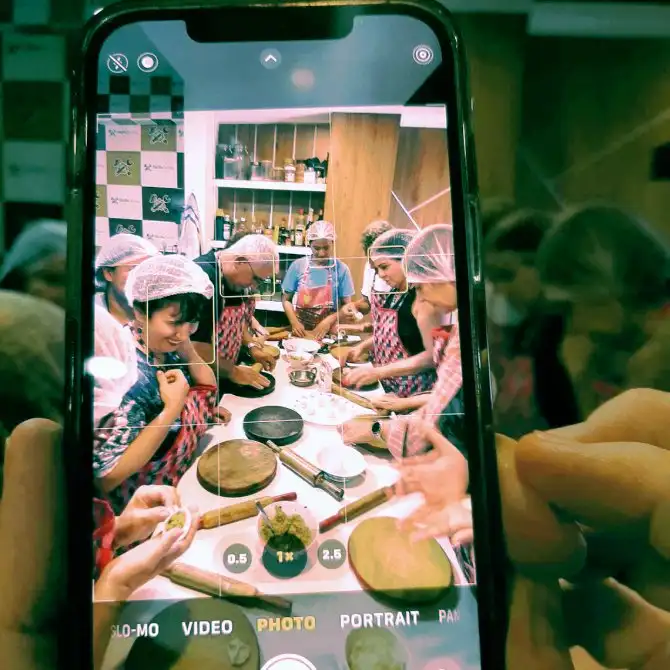
"Once you arrive, you are greeted by the nicest women you will ever meet. They give you traditional scarves and escort you in. They introduce themselves and actually taught us some Nepalese which was really cool. Then they took us through the lesson of making momos and although I struggled at first, they really tried to help me."
— Sid S, TripAdvisor (May 2023)
Frequently Asked Questions
How long does a Kathmandu Valley cultural walking tour take? Half-day tours (4-5 hours) cover one or two heritage clusters in depth. Full-day tours (8-9 hours with lunch) cover a wider circuit. To visit all seven UNESCO sites properly, plan 2-3 separate walking days with different route focuses.
Is Kathmandu safe for walking? Yes. Traffic is chaotic on main roads but the old-town areas where heritage sites are concentrated are pedestrian-only medieval lanes. With a SASANE guide, navigation is effortless and safety awareness is constant. The organization's guides bring particular expertise in women's safety.
What is the best time of day to visit temples? Early morning (6-8 AM) for active worship rituals, fewer crowds, and golden light. Late afternoon (4-5 PM) for warm light photography and evening aarti ceremonies at Hindu temples. Midday is hottest and most crowded.
Do I need to remove shoes at every temple? At most Hindu and Buddhist temples you will enter, yes. Some large courtyards do not require it. Your guide advises at each site. Wear slip-on shoes that are easy to remove and replace.
How much does it cost to enter heritage sites? Kathmandu Durbar Square: $15 (foreigners). Patan Durbar Square: $10. Bhaktapur: $15. Boudhanath: $4. Swayambhunath: $2. Pashupatinath: $10. Changu Narayan: $3. These are included in SASANE guided packages.
Can I combine a valley walking tour with a trek? Absolutely — and most travelers do. A 1-2 day valley cultural walk before or after your Annapurna or Langtang trek provides cultural context that enriches the mountain experience. Many travelers use the valley days for acclimatization before heading to altitude.